Anatomy of the hip
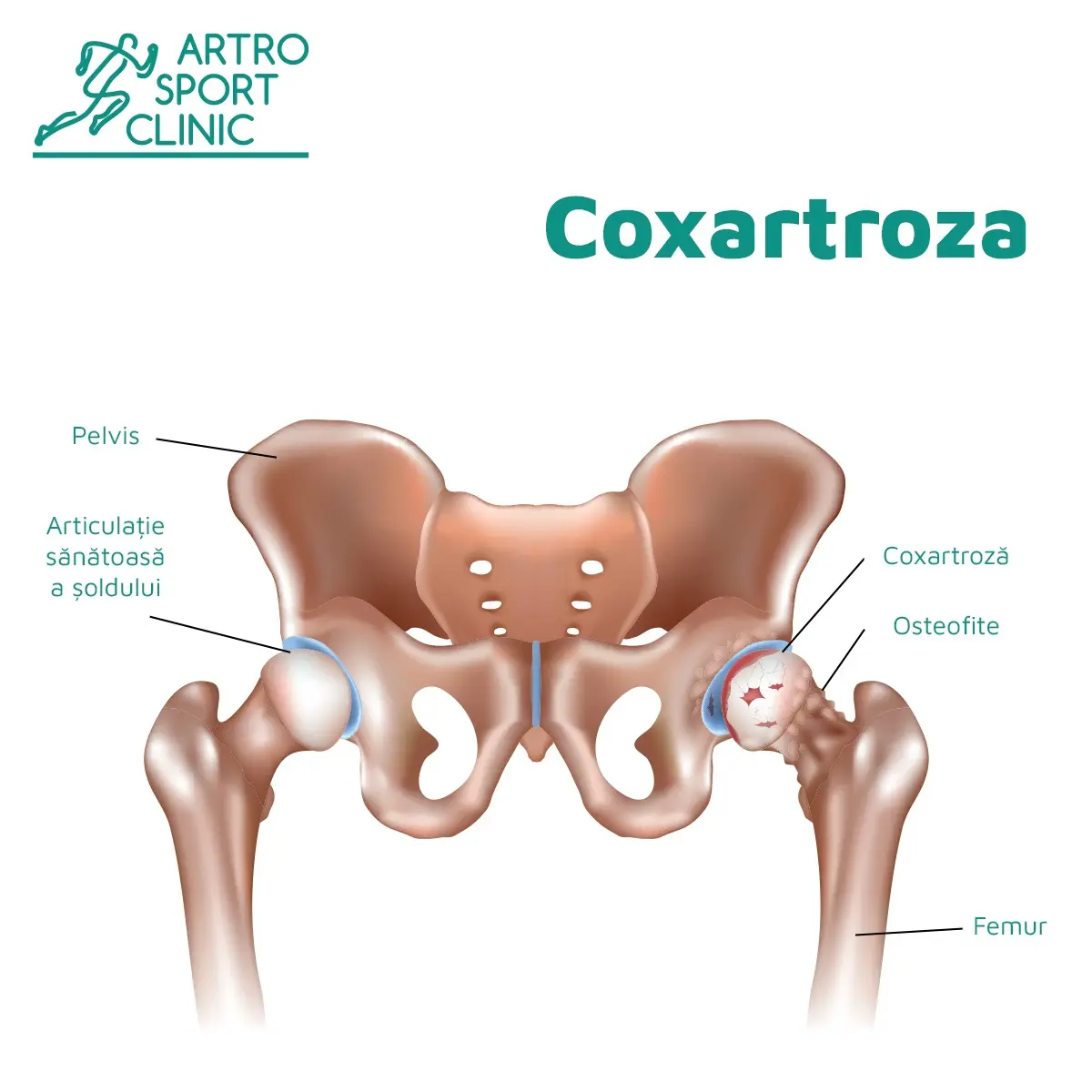
The hip joint plays an extremely important role in supporting the human body, providing the mobility needed for simple everyday activities such as walking, going up or down stairs, getting up from a chair or rising from a squatting position. The hip joint is made up of several structures: the bone ends that come into contact with each other, covered by articular cartilage, and part of the ligaments that join them. The joint is enclosed by the joint capsule. The bones forming this joint are the femur and the pelvis. At the proximal end of the femur there is a ball-shaped structure called the femoral head. It connects with one of the bones of the pelvis, known as the hip bone, which forms the acetabulum.
The hip also comprises several ligaments that hold the bones together: the iliofemoral ligament, the pubofemoral ligament, the ischiofemoral ligament, the ligament of the femoral head and the transverse acetabular ligament. Muscles are another important component of the hip. The gluteal muscles, the adductors, the quadriceps, the iliopsoas and the muscles of the pelvis are the most important ones surrounding the hip joint. As for the main nerves of the hip, these are the femoral nerve and the sciatic nerve. These nerves carry signals from the brain to the muscles in order to move the hip. At the same time, they carry a range of signals to the brain, such as pain or temperature. Blood vessels are the most important source of blood supply to the femoral head, while bursae are generally found where friction occurs between muscles, tendons and bones.
What is hip osteoarthritis (coxarthrosis)?
Between the femoral head and the acetabulum there is a layer of cartilage that ensures the joint moves correctly; with advancing age, this tissue can deteriorate. Coxarthrosis is a degenerative, dystrophic condition of the hip, occurring mainly in people over 40 and most frequently in those over 65. It is characterised by the slow, progressive breakdown of the articular cartilage of the hip. Coxarthrosis has a negative effect on the mechanical function of the joint, gradually leading to its complete destruction. Worldwide, the condition is regarded as one of the most disabling, as it has a considerable impact on the quality of life of those who suffer from it.
Types of hip osteoarthritis
There are two types of coxarthrosis:
- Primary – generally occurs in patients over the age of 60, with no known direct cause.
- Secondary – occurs in younger patients who have certain risk factors that favour early deterioration of the hip joint.
Primary hip osteoarthritis
Primary coxarthrosis often progresses slowly and can affect both hips. The main indirect factors that can lead to hip osteoarthritis are an unhealthy lifestyle, genetic predisposition and the influence of environmental factors.
Secondary hip osteoarthritis
Secondary coxarthrosis accounts for 52% of all cases of degenerative disease of the hip joint. It is caused by a range of congenital or acquired defects such as congenital hip dysplasia, abnormalities of the acetabulum, congenital or acquired hip dislocation, inflammatory joint lesions, bacterial joint infections, severe or repeated trauma, obesity, metabolic disorders or hormonal changes. Secondary coxarthrosis can also be caused by changes in the blood supply to the femoral head and neck, as seen in avascular necrosis of the hip.
What causes hip osteoarthritis?
The exact causes of coxarthrosis are not known; there are several conditions and a number of factors that can lead to osteoarthritis of the hip. Hip dysplasia, for instance, is one of the most common conditions that can lead to coxarthrosis. It is a congenital condition that frequently results from bones and ligaments that have not developed sufficiently, and its symptoms can be noticed as early as childhood. In some people the condition causes no symptoms and is discovered by chance on an X-ray. Hip dysplasia is usually detected between the ages of 25 and 55. In young women, the condition can develop during pregnancy or shortly after childbirth, while in older people it generally appears after retirement, when physical activity is reduced.
Besides hip dysplasia, other medical problems increase the risk of coxarthrosis, such as metabolic disorders, primary and secondary gout, diabetes mellitus, Wilson's disease or haemochromatosis, because they interfere with the optimal development of the joints.
Injuries or trauma to the hip that require surgery can also lead to coxarthrosis. This is because, after surgery, the joint is more vulnerable and the risk of articular cartilage deterioration is higher.
Other factors that can lead to osteoarthritis of the hip are:
- Age – the condition is more common in people over 40-45, but most frequently occurs after the age of 65;
- Genetic factors – if there is a family history of coxarthrosis, your chances of developing the condition rise significantly;
- Sex – women are generally more prone to developing this condition than men;
- Avascular necrosis – generally caused by excessive alcohol consumption, certain medicines or conditions that affect normal blood clotting; if not treated properly, it can lead to coxarthrosis;
- Severe trauma to the hip area;
- Abnormalities of the hip.
What are the symptoms of hip osteoarthritis and how is it diagnosed?
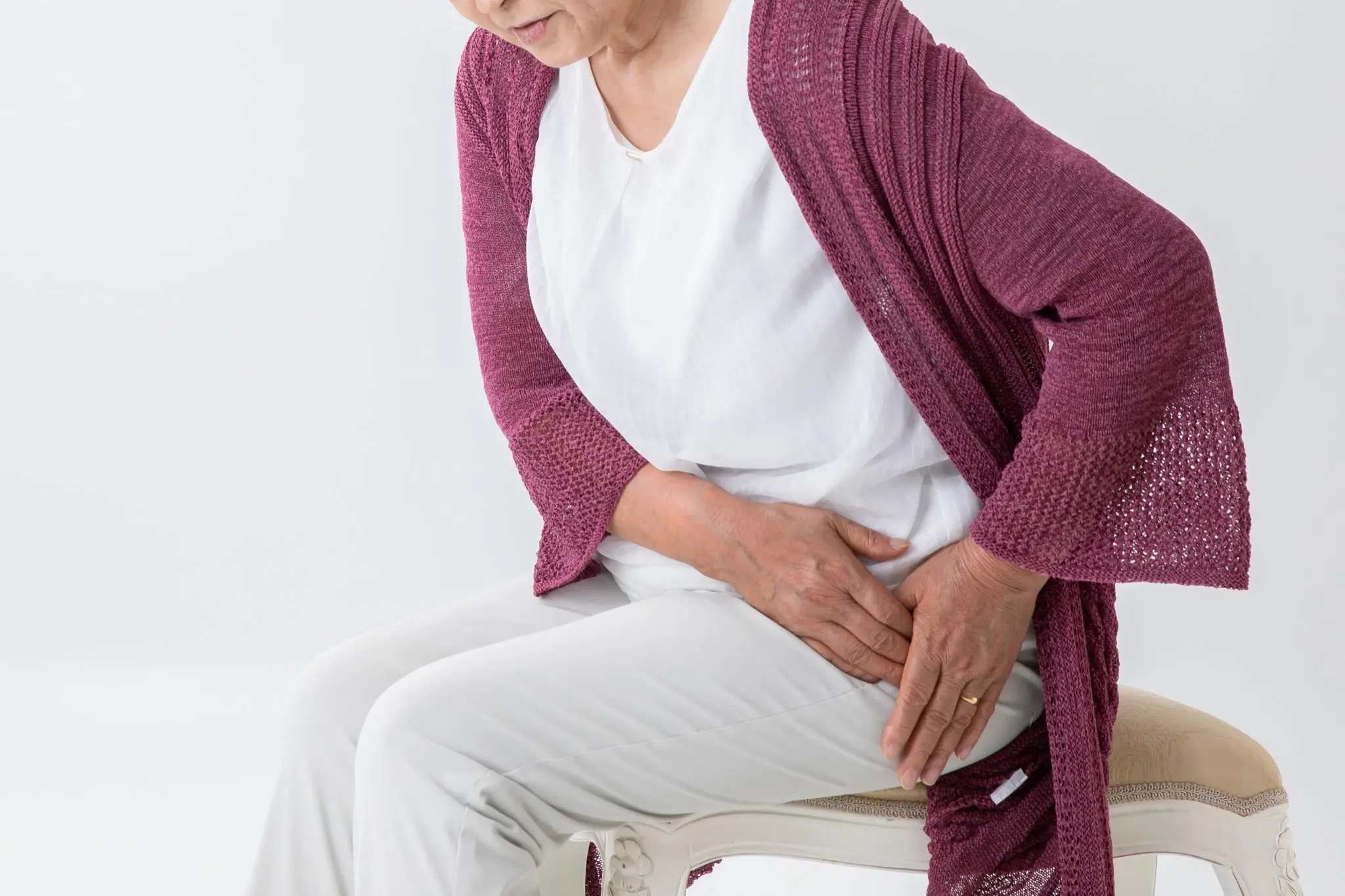
Osteoarthritis of the hip is a condition that can significantly affect patients' quality of life, causing severe pain, loss of mobility and, sometimes, "clicking" sounds during various hip movements. In the early stages, the pain is felt during physical exertion, when going up or down stairs or when performing other activities involving this joint. The pain is most often located in the groin and can radiate to the buttock, the thigh and sometimes even the knee, in which case it must be distinguished from spinal conditions. When the disease is more advanced, the pain is felt not only during physical activity but also at rest, when the joint is not being used. At this point, sensations of "cracking" or of "bone rubbing on bone" can also appear. As the articular cartilage wears away, the patient will feel pain even during sleep, with a visible impact on quality of life.
In addition, patients with coxarthrosis may also report weakness in the limb and tiredness after activities that are normally considered very simple, such as putting on shoes, bending over or getting up from a squatting position.
Treatment of hip osteoarthritis – medication and exercises for hip pain
The symptoms reported by the patient to the doctor, the clinical examination and a pelvic X-ray are sufficient to confirm the diagnosis of coxarthrosis. In certain, fairly rare situations, investigations such as MRI, CT or musculoskeletal ultrasound may also be required.
As far as treatment is concerned, when the condition is not at an advanced stage, conservative treatment is generally recommended, aimed at relieving the patient's symptoms with non-steroidal anti-inflammatory drugs that help reduce pain. In certain situations, the doctor may also recommend intra-articular injections of stem cells, PRP, hyaluronic acid or even hydrocortisone to reduce pain and inflammation.
If conservative treatment does not work and the patient sees no improvement in symptoms after a certain period, surgery remains the most effective treatment. Orthopaedic surgeons generally recommend total hip replacement (arthroplasty), in which parts of the joint are replaced with artificial implants.
Treatment of coxarthrosis also involves maintaining a healthy weight through regular movement and exercise. It is therefore advisable to start gradually, with simple exercises that do not put excessive strain on the joint.
- Walking – a very easy and gentle way to keep moving. You can take a walk in the park or go on foot when covering shorter distances. Walking does not put excessive strain on the joint, yet helps improve mobility;
- Using an exercise bike is also recommended for coxarthrosis. Cycling puts little pressure on the joints and you can adjust the pace so as not to strain the affected area too much;
- Exercises such as muscle strengthening, pelvic lifts or knee-to-chest raises, backward leg flexion or yoga movements can be very beneficial for staying active and building stronger muscles and joints, which can help reduce pain and all the other symptoms that may arise;
- Swimming, cycling, massage or physiotherapy are among the doctors' recommendations, as they help improve mobility and strengthen the muscles.
Foods to avoid with hip osteoarthritis
As with most conditions, there are certain foods that patients with coxarthrosis would do well to avoid so as not to aggravate their symptoms.
- Sugar – foods high in sugar, such as chocolate, cakes or pastries, should be avoided or significantly reduced, as they can worsen inflammation and increase body weight;
- Salt – to be avoided in many conditions; in coxarthrosis it can trigger an inflammatory reaction that subsequently leads to joint deterioration;
- Dairy products – also cause inflammation that triggers pain and significant discomfort. You can replace dairy products with plant-based alternatives such as almond milk, for example;
- Fried foods – can increase inflammation in the body and intensify pain. Our advice is to eat foods that are not cooked with oil or that use only a very small amount in their preparation;
- White flour – pasta, white bread and cereals can trigger the pain caused by coxarthrosis. To avoid pain as far as possible, choose wholegrain products.
FAQ:
Q. What does bilateral hip osteoarthritis mean?
A. Bilateral coxarthrosis means the condition is present in both the right and the left hip joint and can leave the patient bedridden.
Q. What is primary (idiopathic) hip osteoarthritis?
A. Primary coxarthrosis is a progressive condition that generally occurs in elderly people and cannot be linked to another condition or an injury.
Newsletter subscription
Sign up for the Artro Sport newsletter free of charge!