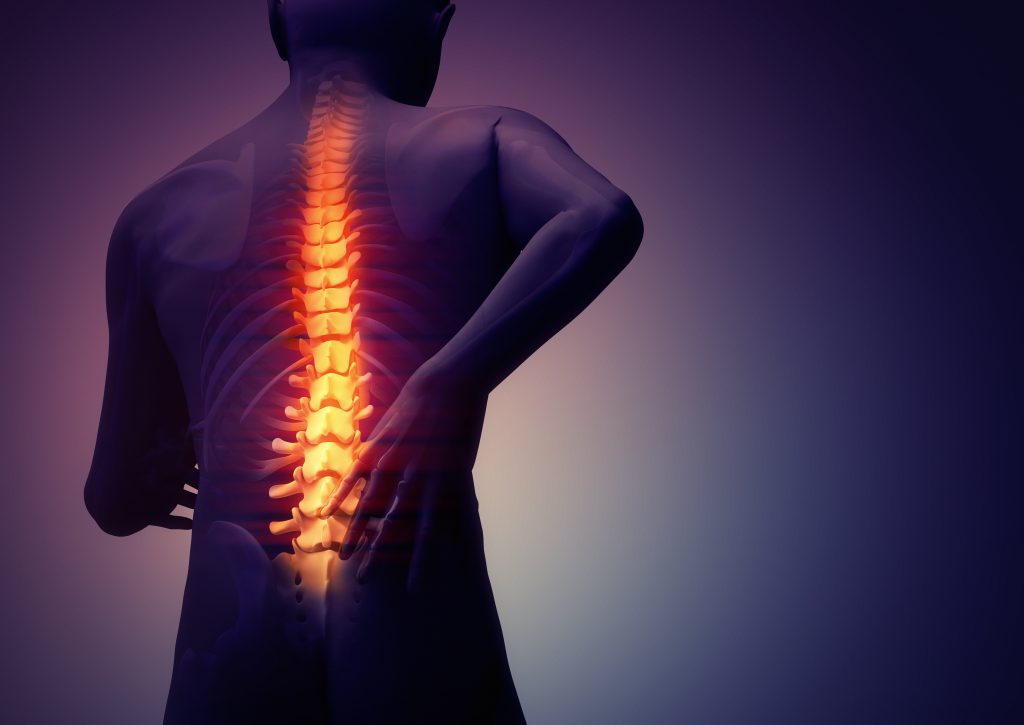
A herniated disc is a medical condition that can affect one or more of the discs positioned between the vertebrae. A disc herniation can occur at any level of the spine, but it is most often found in the lumbar region. In general, the people most prone to this condition are those who are obese, as they place greater pressure on the spine, or those whose jobs involve heavy, sustained and repeated physical effort.
What is a herniated disc?
The spine is made up of 33 vertebrae stacked one above the other and provides the main support for the human body, allowing us to stand upright, bend, extend and twist, while also protecting the spinal cord from injury. Muscles, bones, tendons and flexible ligaments, together with sensitive nerves, all help to keep the spine healthy. However, when these structures are subjected to heavy, repetitive strain, injuries or certain diseases develop that can cause severe pain.
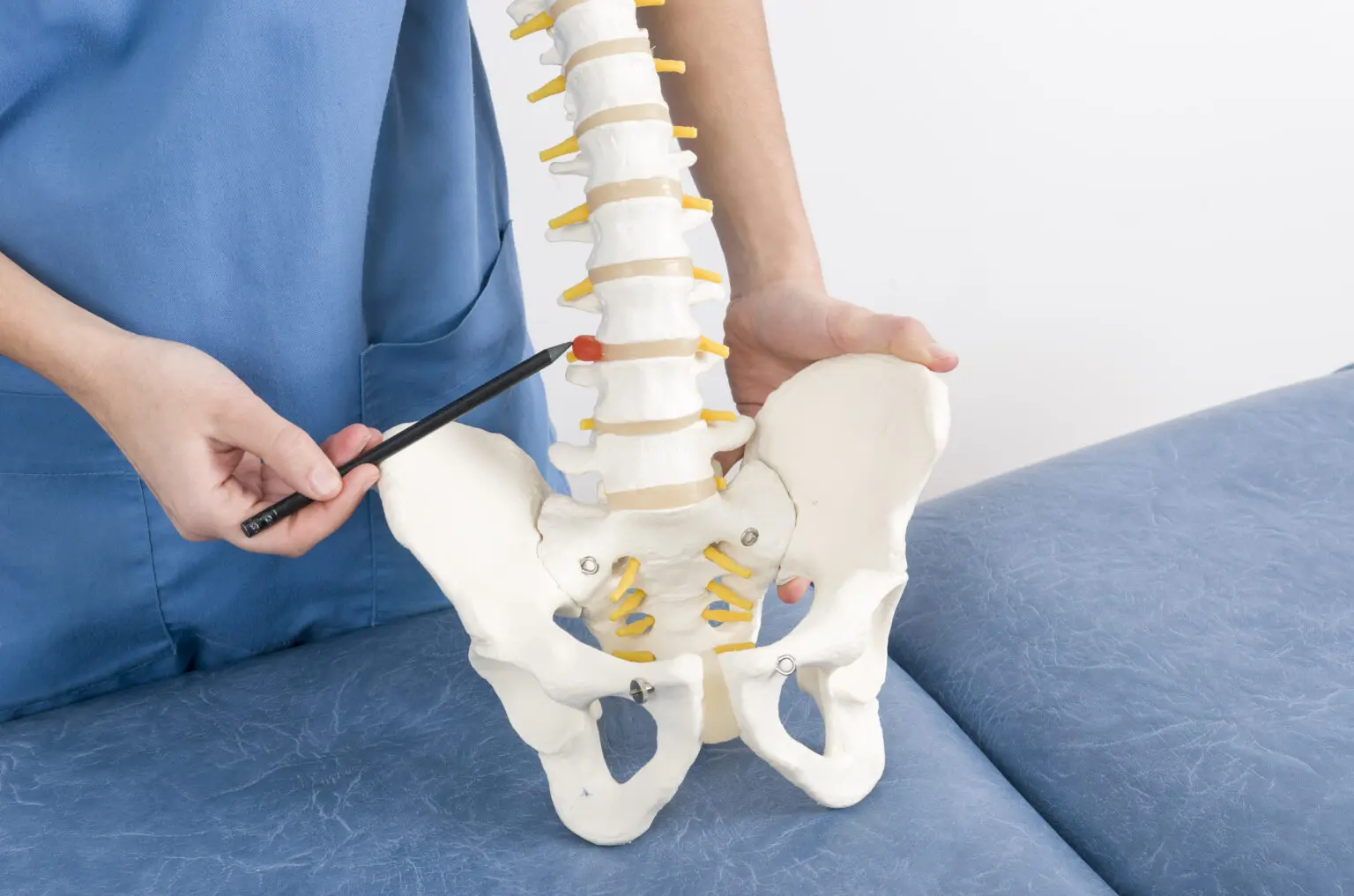
The vertebrae that form the spine are cushioned by several round discs, which have a tough outer layer surrounding a soft core. These discs sit between each pair of vertebrae and act as shock absorbers while allowing the vertebral bodies to move.
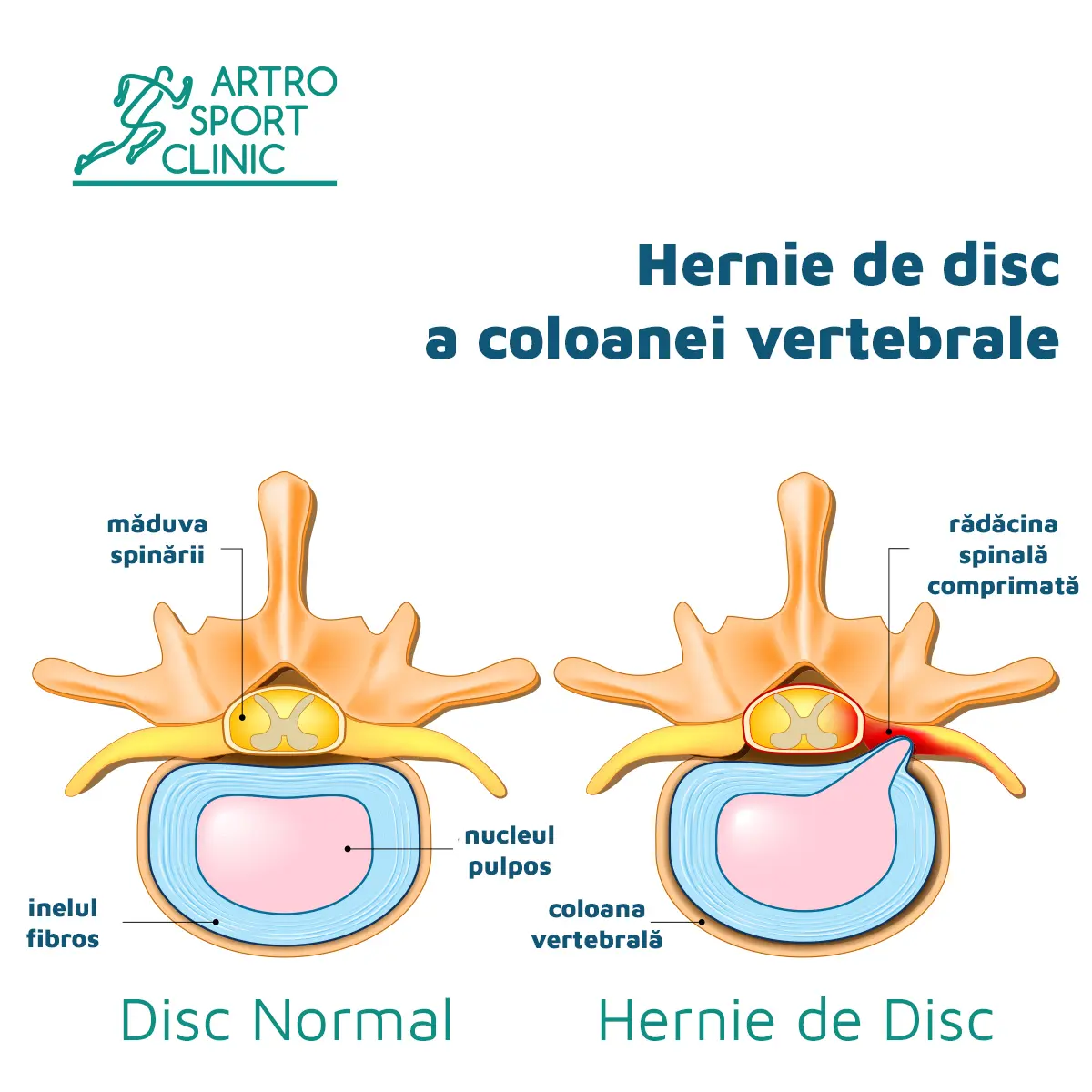
A herniated disc occurs when a fragment of the disc's core is pushed out through a tear in the tough outer (annular) layer into the spinal canal. The affected discs are usually already at an early stage of degeneration. The spinal canal has limited space, so when the disc material moves into the canal it compresses the spinal cord or nerve roots, causing pain or even significant neurological deficits.
Types of disc herniation
A disc herniation can occur at any level, but the most common forms are lumbar and cervical herniation. The first occurs in the lower back and the second in the neck region, both areas of the spine being among the most heavily used in everyday life.
Lumbar disc herniation
A lumbar disc herniation occurs in the lower back and involves pressure on one or more of the nerves that form the sciatic nerve, which can cause pain, a burning sensation, tingling and numbness radiating from the buttocks down the leg. The pain caused by a lumbar herniation is most often described as sharp, like an electric shock. It can be felt quite strongly both when walking and when the affected person is sitting. Trying to straighten the leg on the affected side can intensify the pain. Besides leg pain, patients may also experience back pain, but in most cases the pain in the leg is more pronounced than the pain felt in the lower back.
Cervical disc herniation
A cervical disc herniation occurs in the neck and, like lumbar herniation, is a degenerative condition that can affect anyone. The intervertebral disc consists of a nucleus pulposus and an annulus fibrosus. The nucleus pulposus is located on the inside and is what absorbs shocks and allows the vertebrae to move. The annulus fibrosus surrounds the nucleus pulposus and its purpose is to hold it in place. A cervical disc herniation occurs when the nucleus pulposus is worn and moves towards the spinal canal, where it presses on the spinal nerve root. The most frequently affected discs are C5 and C6, as this is where the cervical spine is most mobile.
Herniated disc – causes and factors
A herniated disc most often results from gradual wear and tear with ageing, known as disc degeneration. As people get older, the discs are no longer as flexible and are more prone to tearing even with minor strain or twisting. Most of the time, people cannot say exactly what caused their herniated disc. Sometimes, using the back muscles instead of the leg muscles to lift heavy objects can cause a disc herniation. The same can happen when twisting or turning suddenly while lifting. Traumatic events such as a fall or a blow very rarely lead to a herniated disc.
Risk factors that can lead to a herniated disc include:
- Weight – excess weight places additional pressure on the spinal discs, which can lead to herniation;
- Working conditions – people with physically demanding jobs who are constantly subjected to heavy strain have a higher risk of disc herniation and back problems in general. Repetitive lifting, pulling, pushing, sideways bending and twisting can increase the risk of a herniated disc;
- Genetic factors – some people have a genetic predisposition to developing a herniated disc;
Symptoms of a herniated disc
Most disc herniations occur in the lower back, but they can also occur in the neck. Symptoms vary from patient to patient, depending on where the herniation occurs and its size. When the herniated disc presses on a nerve, the patient may experience pain, numbness or weakness in the area served by that nerve.
- Cervical herniation
In cervical herniations, the most common symptoms are dull or sharp pain in the neck or between the shoulder blades, pain radiating down the arm to the hand or fingers, numbness and tingling in the shoulder or arm, inability to turn the head or make a sudden movement, and pain that worsens when sneezing or coughing.
- Lumbar herniation
In lumbar disc herniation, pressure on one or more nerves most often causes pain, a burning sensation, tingling and numbness radiating from the buttocks down the leg. Patients with a lumbar disc herniation often describe this pain as sharp, like an electric shock. With lumbar herniation the pain may be felt more severely in the leg than in the lower back, and straightening the leg on the affected side can make things worse.
Diagnosing a herniated disc
A herniated disc is diagnosed following a physical examination in which the doctor asks the patient to perform certain movements to check the sensitivity of the back. In addition to the physical examination, doctors recommend an MRI scan, which provides 3D images of the spine and the structures around it. Magnetic resonance imaging produces images showing the position of the herniated discs and reveals which nerves have been affected.
An X-ray, a CT scan or a myelogram may also be recommended.
An X-ray cannot establish the diagnosis of a herniated disc and is usually recommended to look for other potential causes of pain such as tumours, infections or fractures. A CT scan shows the shape and size of the spinal canal, its contents and the structures around it. Myelography is a radiological investigation that uses a contrast agent.
This investigation shows the pressure being placed on the spinal cord and nerves, even when several discs are herniated. A less common investigation is electromyography, which measures the electrical impulses along the nerve roots, peripheral nerves and muscle tissue. This indicates whether there is any current nerve damage, whether the nerves are healing from a past injury or whether there is another site of nerve compression.
For the most accurate diagnosis, doctors also recommend a neurological examination assessing reflexes, the ability to walk, muscle strength and sensitivity to light touch.
Stages of disc herniation
Stage I: disc instability
In this first stage, chronic postural low back pain is felt. The pain often disappears when physical exertion stops.
Symptoms: low back pain, pain radiating to the limb on the affected side, pain during exertion that eases with rest
Stage II: disc lesion
The disc lesion stage is when the annulus fibrosus tears and the nucleus pulposus protrudes centrally or laterally.
Symptoms: sudden onset of pain, unilateral or bilateral low back pain, pain of mechanical origin, with no radiation or radiating down to the area above the knees
Stage III: radicular
This stage consists of three levels of involvement:
- Irritative stage – the herniated disc reaches the nerve root
- Compressive stage: the herniated material reaches the nerve root and compresses it
- Interruption stage – in addition to the symptoms of the first two stages, the patient is now unable to stand on tiptoe in the case of S1 root palsy, or unable to stand on the heels in the case of L5 root palsy.
Stage IV: lumbar discopathy
In this stage of lumbar disc herniation, disc arthrosis and facet joint arthrosis develop, generally after the age of 40, because as we get older the nucleus pulposus dehydrates, which promotes the degenerative process. At the same time, the annulus fibrosus undergoes changes caused by the wear and strain to which the spine is subjected.
Treatment of a herniated disc
Treatment of a herniated disc can be either conservative, consisting of medication and physiotherapy sessions, or surgical, if conservative treatment does not produce results.
Medication
Initial treatment for a herniated disc is usually conservative. The doctor generally recommends that the patient keep to a low level of activity that does not cause pain, for a few days to a few weeks. This helps reduce inflammation of the spinal nerve.
A herniated disc is often treated with non-steroidal anti-inflammatory drugs if the pain is only mild to moderate.
Physiotherapy and exercise therapy
If the pain is not relieved by medication, the doctor may recommend physiotherapy and exercise therapy. Therapy may include gentle massage, ice and heat therapy, ultrasound, electrical muscle stimulation and stretching exercises.
Surgical treatment
The doctor recommends surgery if conservative treatment options do not reduce or fully eliminate the pain. Doctors discuss the surgical options with patients to determine the appropriate procedure. As with any surgery, the patient's age, general health and other associated conditions are taken into account when choosing the appropriate treatment. Surgery is usually recommended when conservative treatment is ineffective, when the pain limits normal activity or affects quality of life, or when neurological deficits appear.
Complications of a herniated disc
The spinal cord ends just above the waist; below it, a bundle of long nerve roots called the "cauda equina" continues through the spinal canal. Very rarely, a herniated disc compresses the entire spinal canal, including all of its nerves. In rare cases, emergency surgery may be needed to avoid permanent neurological deficits.:
- pain, numbness or muscle weakness
- incontinence or difficulty urinating
- progressive loss of sensation on the inner thighs and the back of the legs
Preventing a herniated disc
When it comes to preventing a herniated disc, a number of recommendations should be kept in mind:
- Regular exercise – toning the paravertebral muscles stabilises and supports the spine;
- Maintain good posture – this reduces pressure on the spine and discs. It is important to keep the back straight and aligned, especially when sitting still for long periods. Another important aspect is lifting heavy objects correctly. In such situations, it is the legs that should do most of the work, not the back;
- Maintain a healthy weight. Excess weight puts more pressure on the spine and discs, making them more prone to developing a herniation.
FAQ:
Q: What are the risks associated with herniated disc surgery?
A: Herniated disc surgery carries very few complications. In fairly rare cases, people may experience bleeding or infection, and around 5% of those who have had the surgery may develop a new herniation.
Q: How long is the recovery period after herniated disc surgery?
A: Most patients can leave hospital 24-48 hours after the operation, and doctors generally recommend avoiding certain activities such as driving, standing for long periods, lifting weights or bending.
Newsletter subscription
Sign up for the Artro Sport newsletter free of charge!