

Introduction
If you think that you or your child may have symptoms of Charcot-Marie-Tooth disease, or you have received a diagnosis of Charcot-Marie-Tooth disease, this guide can help you understand more about the condition.
Below, we explore what causes Charcot-Marie-Tooth disease, where you can find further help for Charcot-Marie-Tooth disease and ways to live well with this condition. Remember, you are not alone and there are many sources of support available.
If you are worried about any of the symptoms or information you read here, please consult your doctor.
What is Charcot-Marie-Tooth disease?
Charcot-Marie-Tooth disease (CMT) is a genetic, or inherited, neurological condition. It affects the nervous system and specifically the peripheral nervous system. This allows your body to act, both voluntarily (when your brain tells it to) and involuntarily (for example, when your organs function without you thinking about it). Charcot-Marie-Tooth disease causes problems with the ability to feel different sensations, such as heat, cold, pain and so on. It also affects motor skills, which are needed for activities that involve the deliberate movement of muscles.
Charcot-Marie-Tooth is named after the three scientists who discovered the disease. It is considered to be a type of muscular dystrophy, because it leads to wasting of the muscles. It is also known as hereditary motor and sensory neuropathy (HMSN).
It is thought that around 23,000 people in the United Kingdom have a form of CMT, so although it is the most common disorder of its kind, it is fairly rare. More precisely, 1 case in every 25,000 people. It is believed that many people may have CMT without realising it, because their symptoms are minimal or ignored. There is currently no cure for this condition, and treatment of Charcot-Marie-Tooth disease usually focuses on managing the symptoms. Although surgical options are available, medication is only symptomatic.
CMT is progressive and, as such, symptoms are likely to worsen over time. It does not usually affect a person's life expectancy and many people live well with this condition.
What causes Charcot-Marie-Tooth disease?
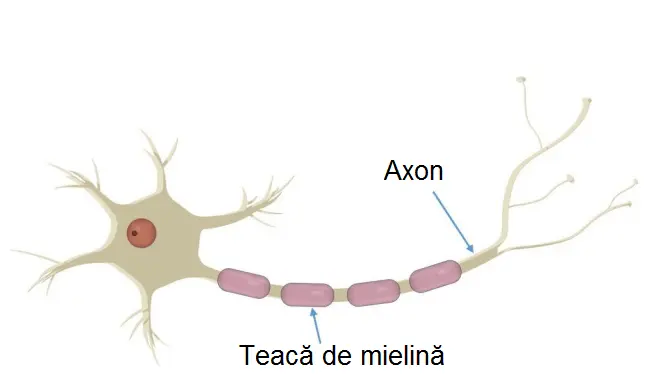
CMT is caused by a faulty gene of the peripheral nervous system, inherited from one or both parents. This faulty gene causes nerve damage to develop, usually in a person's upper and lower limbs. Nerves consist, among other things, of an inner axon that transmits signals to and from the brain, and an outer myelin sheath, which insulates and protects the signal. Charcot-Marie-Tooth disease causes damage to the axon and/or the myelin sheath.
We are all made up of DNA, which is a code that determines the physical characteristics of our body. DNA is made up of thousands of genes, which are responsible for instructing the cells in the body to produce proteins. Proteins are the building blocks of the body, essential for forming muscles, tissues and organs.
The nerve damage that causes the symptoms of Charcot-Marie-Tooth disease occurs because the faulty gene affects the normal development of proteins that are important for the health of the axon and the myelin sheath in our nerves.
Did you know... "Charcot-Marie-Tooth disease is fairly rare – 1 case in every 25,000 people. In the United Kingdom 25,000 people have this condition, yet it is the most common disorder of its kind."
Types of Charcot-Marie-Tooth disease
Charcot-Marie-Tooth disease occurs in several forms.
There are thought to be two main types of Charcot-Marie-Tooth disease: either axonal, in which damage occurs to the axon of the nerves; or demyelinating, causing damage to the myelin sheath that protects the axon, or core, of the nerve.
However, within this broad classification there are several defined types. Researchers have discovered more than 80 genes that cause Charcot-Marie-Tooth disease and therefore, technically speaking, each affected gene leads to its own "type".
Here, we list the most common types of Charcot-Marie-Tooth disease that people are diagnosed with:
- CMT 1 – the myelin sheath slowly breaks down – the most common (around 30% of cases)
- CMT 2 – a less common and usually less severe type than CMT 1, caused by defects in the axon. Patients have less disability and sensory loss than people with CMT1
- CMT 3 – this rare type is also known as Dejerine-Sottas syndrome. Damage to the myelin sheath causes severe symptoms that usually develop in early childhood
- CMT 4 – similar to CMT 3 in that it is fairly rare and affects the myelin sheath, this type develops in childhood and can cause progressive disability, with some people becoming unable to walk
- CMT X – more common in men than in women
Did you know... "CMT is a genetic, inherited, neurological condition that affects the nervous system."
Symptoms of Charcot-Marie-Tooth disease
Here, we outline common symptoms of Charcot-Marie-Tooth disease and early signs that may be noticed.
Everyone with a form of Charcot-Marie-Tooth disease will experience their condition differently, depending on the causes behind their Charcot-Marie-Tooth disease.
Sometimes a child may be diagnosed by chance, with their parents unaware that they have this condition. Sometimes the child shows no symptoms, or only a few signs of Charcot-Marie-Tooth disease. It is believed that many people with mild symptoms of Charcot-Marie-Tooth disease may live without a diagnosis or treatment, which confirms the varying severity of the condition.
Common symptoms that may develop over a lifetime include:
- Loss of muscle mass and strength
- Lack of sensation in certain areas of the body
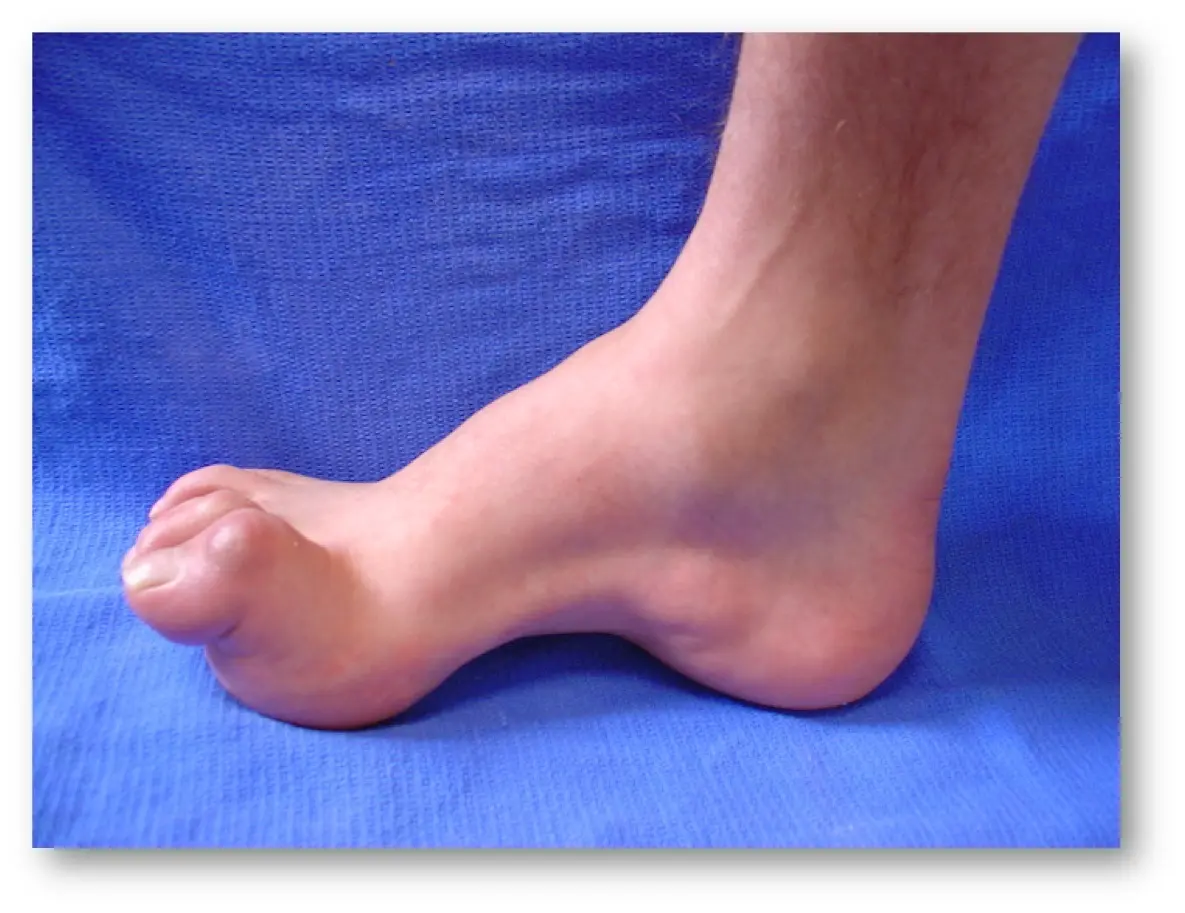
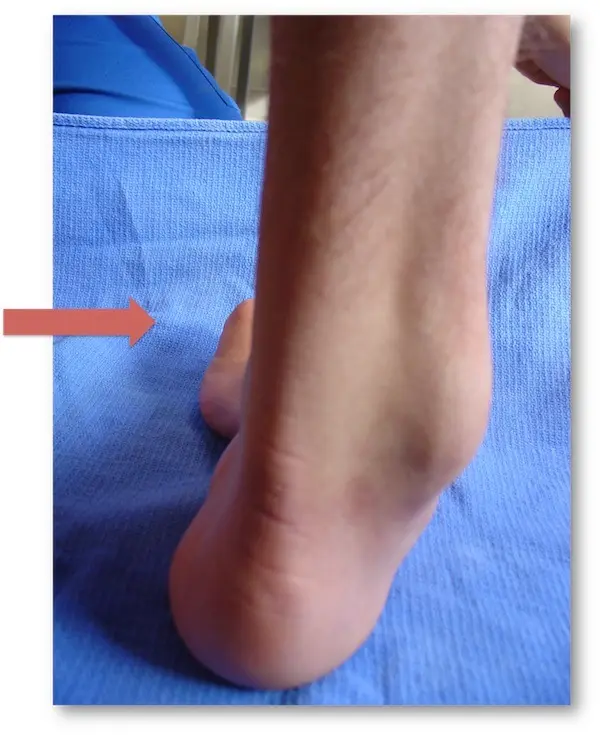
- Unusual feet, i.e. high arches, flat feet or hammer toes
- Weak ankles
- Poor circulation in the extremities, leading to cold hands and feet
- Unusually shaped legs due to muscle wasting
- Fatigue
- Tremor (uncontrollable shaking)
- Scoliosis (abnormal curvature of the spine)
- Difficulty speaking and swallowing (dysphagia)
- Reduced strength or mobility of the hands
- Neuropathic pain
- Musculoskeletal pain
- Mobility problems
If you think that you or your child have any of the symptoms of Charcot-Marie-Tooth disease listed here, it is important not to panic, but to visit your GP to discuss things further. The symptoms you have may be the result of other factors or minor health conditions.
If you visit your GP, they are likely to ask you many questions about your symptoms and to carry out a physical examination to look for muscle weakness or visible signs, such as an abnormal appearance of the feet.
If your doctor suspects that you may have this condition, the next step towards a confirmed diagnosis of Charcot-Marie-Tooth disease is to undergo neurological tests, and you are likely to be referred to a neurologist.
Did you know... "A person can carry CMT genes but not have the disease."
Living with Charcot-Marie-Tooth disease
Many people who have been diagnosed with Charcot-Marie-Tooth disease are able to lead full and active lives.
Finding out that you or your child have Charcot-Marie-Tooth disease can be difficult to take in, and you may need some time to come to terms with the idea of this condition. Everyone experiences Charcot-Marie-Tooth differently, depending on the symptoms present and how they affect daily life.
If you are a young person with a Charcot-Marie-Tooth diagnosis, or a parent, you may have a range of emotions and concerns about the future.
If you need support for yourself, or want to find out more about how you can support your child in terms of education, benefits or finding a support group, www.asociatiaCMT.ro is a charitable organisation dedicated to people with disabilities resulting from a diagnosis of Charcot-Marie-Tooth.
Treatments for Charcot-Marie-Tooth disease
There are ways to treat Charcot-Marie-Tooth disease so that a person with this condition can live well.
There is currently no cure for the condition, but research into how the disease arises and develops, as well as into potential disease-modifying therapies, continues.
Treatment for Charcot-Marie-Tooth disease is likely to be coordinated by a neurologist, but may involve many other specialties and healthcare professionals. For example, a physiotherapist can help you manage any physical or movement problems you experience. They are experts in managing problems that affect the muscles and joints, so if CMT causes a person to have difficulty walking, they can offer solutions that may help. They can prescribe a walking aid, a series of strengthening exercises, and can manually manipulate areas of the body that cause tension, pain or stiffness, using massage and similar techniques.
Some people with Charcot-Marie-Tooth disease will experience a certain level of pain at some stage during the progression of their condition. The pain sometimes stems from nerve damage, or occurs because the muscles have become weaker. Some people find that these physical changes cause pain and problems in other areas of the body, because it is common for the body to adapt the way it moves in order to compensate for weakness in certain areas. Pain can be managed with medication and you may be referred to a pain management clinic. However, the level of pain is different for each person with CMT, and everyone will describe a different experience. Remember that there are plenty of services available to provide support for Charcot-Marie-Tooth disease, and your GP can help you access many of them.
There are other potential treatments for Charcot-Marie-Tooth disease, such as speech and language therapy, if the condition causes some speech or swallowing problems, and occupational therapy, which looks at the ways in which a person can adapt their daily tasks (with or without specially designed equipment) to help them live well.
Treatment options for Charcot-Marie-Tooth disease may also include orthopaedic surgery, most commonly of the foot. Surgery may be an option if your feet are particularly affected and if this is affecting your mobility and quality of life. There are many forms of surgery to correct the wide variety of deformities and physical problems secondary to CMT. These procedures can be explained to you in detail by our clinic's specialist in Foot and Ankle Surgery, Dr. Raul Colța.
What are the goals of surgery for those with a cavovarus deformity?
These feet are rigid, with reduced shock absorption. We do not want to make them more rigid through arthrodesis if we can avoid it. Instead, we want to preserve movement and achieve a foot that sits flat on the ground with balanced muscle pull. Patients with CMT are generally healthy and tolerate surgery very well.
We perform these operations under general anaesthesia with a regional nerve block, which provides post-operative pain relief for 24-72 hours.
Typically, "wedges of bone" are removed from the heel and from the big toe of the foot to create a flat foot. The peroneus longus muscle is transferred to the weak peroneus brevis muscle to stabilise the ankle, and the tibialis posterior muscle is brought from one side of the foot to the other to help lift the ankle. Tight tissues are released, loose tissues are tightened, and the toes are straightened so that they fit into a shoe.
I suspect it all sounds frightening, but that is what orthopaedic surgery is about. And the results are excellent.
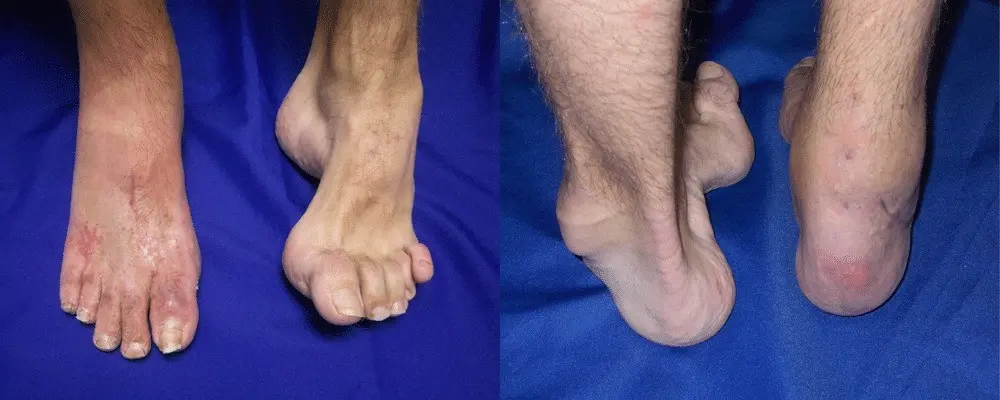
In the first two weeks after surgery it is important to rest. The foot is placed in a plaster splint with no weight-bearing for 6 weeks. The sutures are removed after two weeks. After that, weight-bearing is usually possible in a removable boot, and physiotherapy begins.
It can take up to a year to get used to your new foot, but it is worth it. The opposite foot can be operated on straight away, 12 weeks after the first.
The results are excellent and, even if the disease progresses, the foot is better than it would have been without an operation. Many patients are able to come out of their orthoses completely or, at the very least, reduce their size and walk with less pain.
It is important to remember that no one with CMT is born with a severe foot deformity. It develops over time. At a certain point, the reconstructive procedures discussed above become impossible. Chronic abnormal stress on the unbalanced cavovarus foot leads to ligament laxity, osteoarthritis and fixed deformity. Joint fusions will then be the only option.
Do not let this happen to you – seek help.
Photo source: www.cmtausa.org; www.musculardystrophyuk.org.
Newsletter subscription
Sign up for the Artro Sport newsletter free of charge!