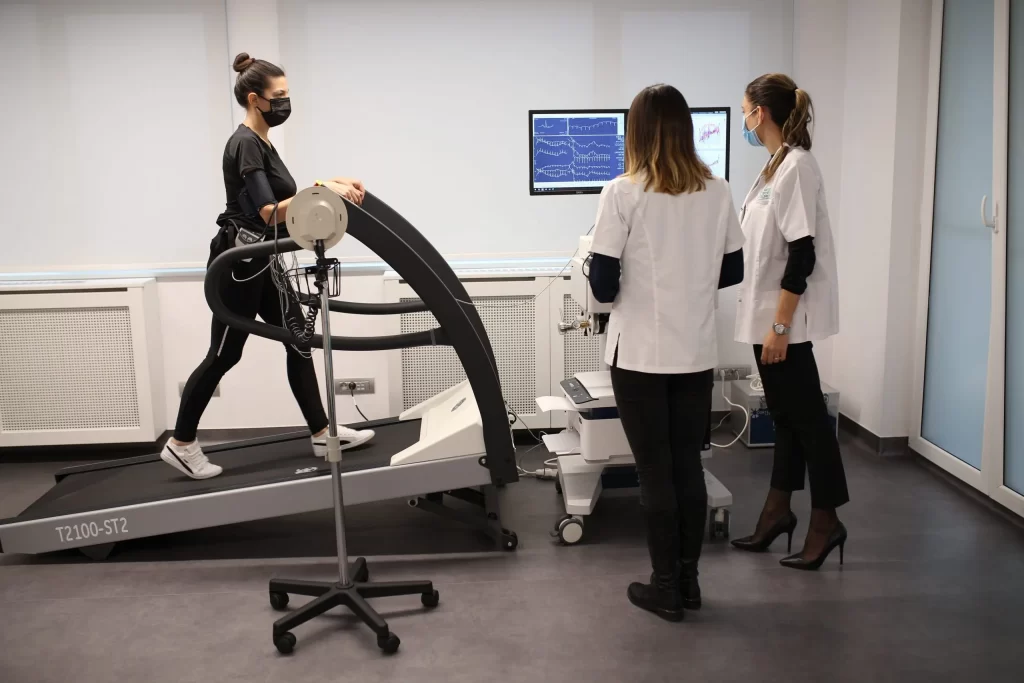
The benefits of an active life, with regular exercise, are well known and have been demonstrated in numerous studies. But is there a threshold of exertion beyond which the risks outweigh the benefits?
Regular physical activity is one of the most powerful tools for improving health and has positive effects on cardiovascular risk factors: lowering blood pressure, cholesterol and blood sugar, reducing insulin resistance and maintaining an optimal body weight. Numerous studies have repeatedly demonstrated an association between moderate aerobic exercise and a reduced risk of coronary heart disease and death. There is controversy, however, regarding prolonged intense exercise and its risks/benefits for cardiovascular health in certain categories of athletes.
What does "athlete" mean?
By "athlete" we mean both people who take part, in a team or individually, in sporting activities that involve a competitive spirit and the pursuit of excellence with the aim of winning prizes, and which require a systematic and intense form of training (such as professional sportspeople), and people who take part in recreational sporting activities (for example, weekend runners of any age).
In recent years, sporting competitions for amateur athletes have grown in popularity: long-distance running events, from half marathons to ultramarathons, both on the flat and in the mountains, cycling races and triathlons. Of course, we could say this is a good thing, because it motivates people to lead a more active life and do more sport, but not everyone knows how to train properly and many overload their bodies trying to become the fastest runners overnight, while others believe that if they can run 10 km in the park without any problems, they can cope perfectly well with a mountain marathon.
The risks of intense exercise
A study published in 2011 showed that around 40% of marathon runners have a transient rise in blood creatinine, alongside a rise in other biomarkers of acute kidney injury. Although these changes are temporary and resolve within about 24 hours, the long-term effect of repeated episodes of acute kidney injury caused by endurance exercise is not yet known.
Another study published in 2009 concluded that prolonged intense exercise affects immunity and increases susceptibility to respiratory infections.
Endurance sport, through the intense strain it places on the heart, can lead to cardiovascular complications, from faintness or syncope (loss of consciousness) to malignant arrhythmias and cardiac arrest if there is an underlying heart condition that is still undiagnosed or has been neglected.
Sudden cardiac death (SCD) is the most common cause of sudden death in athletes. Current estimates of the incidence of SCD in athletes range between 1 in 1 million and 1 in 23,000 athletes per year, and an even higher risk of 1 in 3,000 has been reported in certain categories of athletes (men, black athletes and male basketball players), these differences arising from the different methodologies used and the heterogeneity of the populations compared.
Triggers of SCD include exercise-related sympathetic stimulation (the action of catecholamines on an arrhythmogenic substrate, causing ventricular arrhythmias), sudden haemodynamic changes and myocardial ischaemia. Other mechanisms thought to play a role in causing death are dehydration and electrolyte imbalances, hyperpyrexia (a rise in body temperature) and increased platelet aggregation.
The main causes of SCD in athletes are shown in the table below. In young athletes (<35 years) congenital/genetic heart diseases predominate, the most common being hypertrophic cardiomyopathy (HCM), which can sometimes be difficult to distinguish from athlete's heart, since in both cases there is a thickening of the heart walls, arrhythmogenic right ventricular cardiomyopathy and congenital coronary artery anomalies. In athletes over the age of 35, the most common cause of SCD is atherosclerotic coronary artery disease. These conditions can often be clinically silent. Around 30% of athletes may have symptoms such as chest pain, breathlessness, palpitations, reduced exercise tolerance and reduced performance, pre-syncope and syncope. It is very important not to ignore symptoms and to see your doctor when you feel that something is not right.
Table 1. Cardiovascular conditions associated with SCD in athletes
| Congenital/Genetic | |
|---|---|
| Structurally abnormal heart | Structurally normal heart |
| Hypertrophic cardiomyopathy | Congenital long QT syndrome |
| Arrhythmogenic right ventricular cardiomyopathy | Catecholaminergic polymorphic ventricular tachycardia |
| Dilated cardiomyopathy | Wolff-Parkinson-White syndrome or other accessory pathways |
| Other cardiomyopathies (left ventricular non-compaction) | Brugada syndrome |
| Congenital coronary artery anomalies | Other channelopathies |
| Aortopathies (e.g. Marfan syndrome, ascending aortic aneurysm/dissection) | |
| Valve disease (e.g. congenital aortic stenosis, mitral valve prolapse) | |
| Acquired | |
| Structurally abnormal heart | Structurally normal heart |
| Atherosclerotic coronary artery disease | Commotio cordis |
| Myocarditis | Acquired long QT syndrome (e.g. drug-induced) |
| Kawasaki disease | Ingestion of certain substances (doping) |
In our country, the popularity of endurance sports (running and cycling) has grown in recent years, and there is no way of screening participants in amateur competitions: everyone signs up for races "at their own risk", without a prior medical check-up and without an objective assessment of their exercise capacity. The prevailing attitude is "It won't happen to me!". Also, for financial reasons, many clubs cannot afford to send their athletes for professional cardiac screening. Without proper medical checks, whether we are talking about amateur or professional sportspeople, they expose themselves to risk. Epidemiological studies have shown that the occurrence of SCD in athletes is 3 times higher than in the non-athletic population. In other words, sporting activity, competitive or otherwise, adds a significant risk for athletes who have a hidden, undiagnosed heart condition.
Prevention
In Italy, the incidence of sudden death in athletes fell significantly – from 3.6/100,000/year to 0.4/100,000/year – following the introduction of the cardiovascular screening protocol for sportspeople in 1982. This protocol was also adopted by the European Society of Cardiology from 2005, as well as by the International Olympic Committee. FIFA has included echocardiography in its screening programme and, since 2006, has required footballers taking part in the World Cup to undergo an exercise ECG test.
It is important to remember that an unhealthy lifestyle, with an unbalanced diet, tobacco use and excessive alcohol consumption, cannot be offset by intense sporting activity. On the contrary, it can hasten the worsening of pre-existing coronary artery disease.
If you are a sedentary person and want to take up a sport, or if you are a "weekend warrior" who takes part in running, cycling or triathlon events, or even a competitive athlete, it is advisable to have a full cardiological examination (consultation, ECG, echocardiography and exercise ECG test), especially if:
- You have relatives who died suddenly before the age of 55 or who have cardiovascular disease (heart attack, stroke)
- You have a personal history of cardiovascular disease, high blood pressure or diabetes
- You are over 30-35 years of age
- You have symptoms such as: pain or discomfort in the chest during exercise, tiredness out of proportion to the amount of exercise you are doing, feeling faint or dizzy during exercise, loss of consciousness, palpitations, or a sudden speeding up or slowing down of your heart rate
Newsletter subscription
Sign up for the Artro Sport newsletter free of charge!