Intra-articular injuries of the knee can occur in any situation: following a sports injury, following trauma (for example, car accidents) or as a result of diseases that affect the joints. Below we set out all the important information about a minimally invasive procedure called knee arthroscopy.
What is knee arthroscopy and what does it involve?
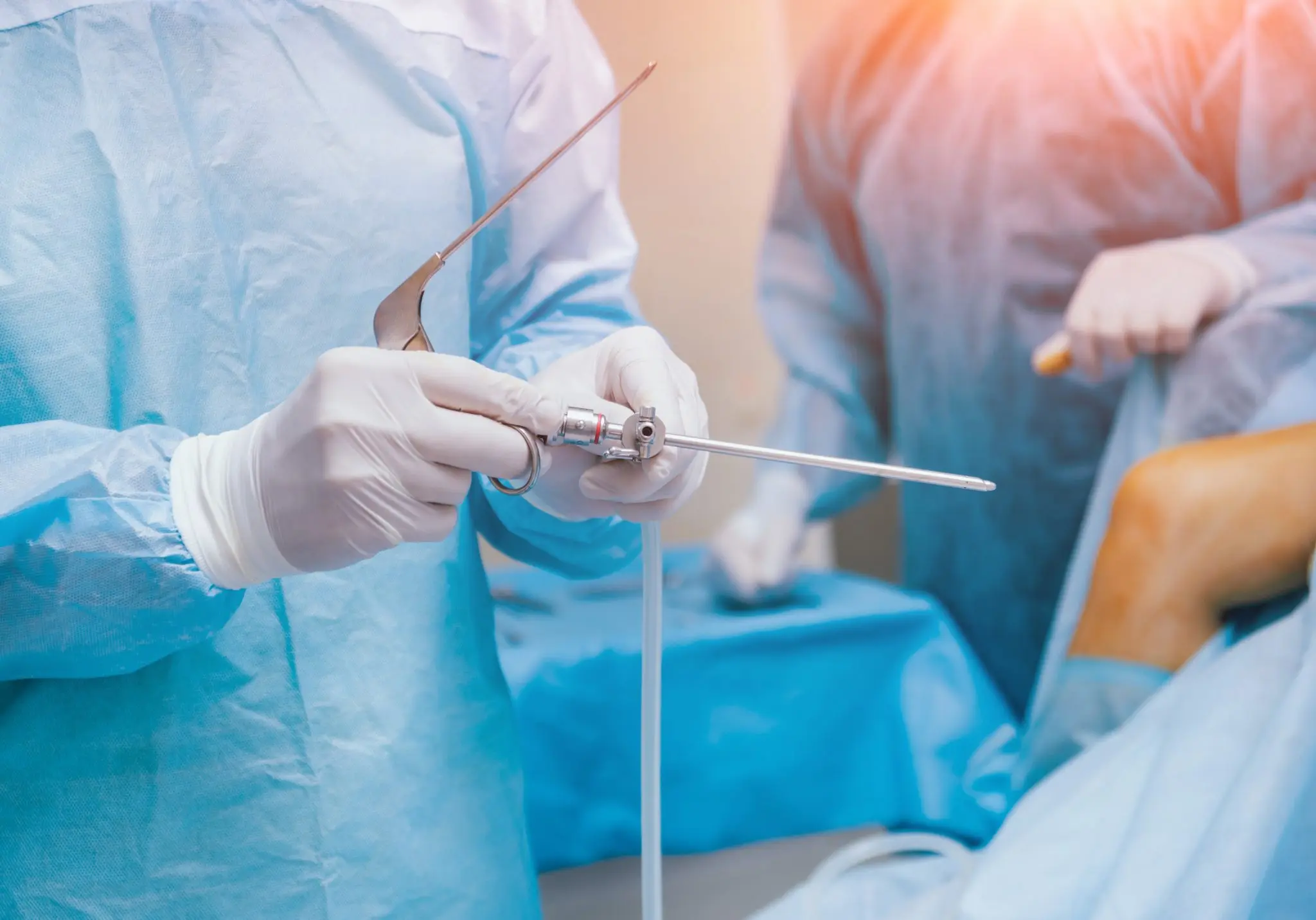
Arthroscopy is a minimally invasive surgical procedure by means of which a wide range of intra-articular problems in the knee can be diagnosed and resolved. By viewing the joint in the finest detail, the treating orthopaedic surgeon is able to establish a correct diagnosis and treat intra-articular lesions appropriately.
The minimally invasive nature of the procedure comes from the fact that it involves two or more small incisions, of around 1 cm, made under anaesthesia. Optical instruments (a lens and lighting system, an arthroscope, a miniature video camera) and working instruments are inserted into the joint through these incisions. In this way, areas of the joint that cannot easily be reached by the traditional open-surgery method can be viewed, and all intra-articular lesions can be examined and treated.
Why is knee arthroscopy needed?
Knee arthroscopy is indicated for the following conditions:
- Meniscal lesions (e.g. meniscus tear);
- Ligament tears (tears of the posterior or anterior cruciate ligament – the latter are seen particularly in basketball or football);
- Early or moderate osteoarthritis of the knee;
- Chronic synovitis;
- Loose bodies in the joint;
- Cartilage lesions;
- Locked knee.
What is knee arthroscopy used for?
Most often, this procedure is used for:
- Reconstruction of a torn cruciate ligament;
- Repair of the meniscus or removal of the torn portion;
- Removal of inflamed synovial tissue;
- Repair of the articular cartilage;
- Removal of loose fragments of bone or cartilage.
How do I prepare for a knee arthroscopy?
Pre-operative preparation for knee arthroscopy includes a series of investigations aimed at identifying any other concurrent health problems that could have an impact on the procedure and on post-operative recovery. Investigations such as blood tests, an MRI scan, an electrocardiogram and a chest X-ray are required. You will then be seen by an anaesthetist to discuss the recommended type of anaesthesia. The average duration of this procedure is 40-60 minutes, depending on the complexity of the lesions.
What does recovery after arthroscopy involve?
One of the main advantages of knee arthroscopy is precisely the much shorter recovery time compared with other surgical procedures. Of course, recovery varies from patient to patient depending on several factors (diagnosis, age), but in general the patient can walk on the day of the operation or the following day.
In general, for recovery the patient will be prescribed painkillers and anti-inflammatories as needed, antibiotics to prevent post-operative infections, keeping the knee in an elastic bandage and applying cold compresses with ice. Physiotherapy can also give the patient real support in recovery. Following the treating doctor's instructions is particularly important for a successful recovery.
Another major advantage of knee arthroscopy is the extremely low rate (under 1%) of post-operative complications, with a favourable long-term prognosis in most cases and a very rapid recovery.
If you think you need a knee arthroscopy or any other orthopaedic procedure, Artro Sport Clinic is the right place. Together with our specialists, you will be able to overcome your condition and get back to your normal pace of life.
Newsletter subscription
Sign up for the Artro Sport newsletter free of charge!