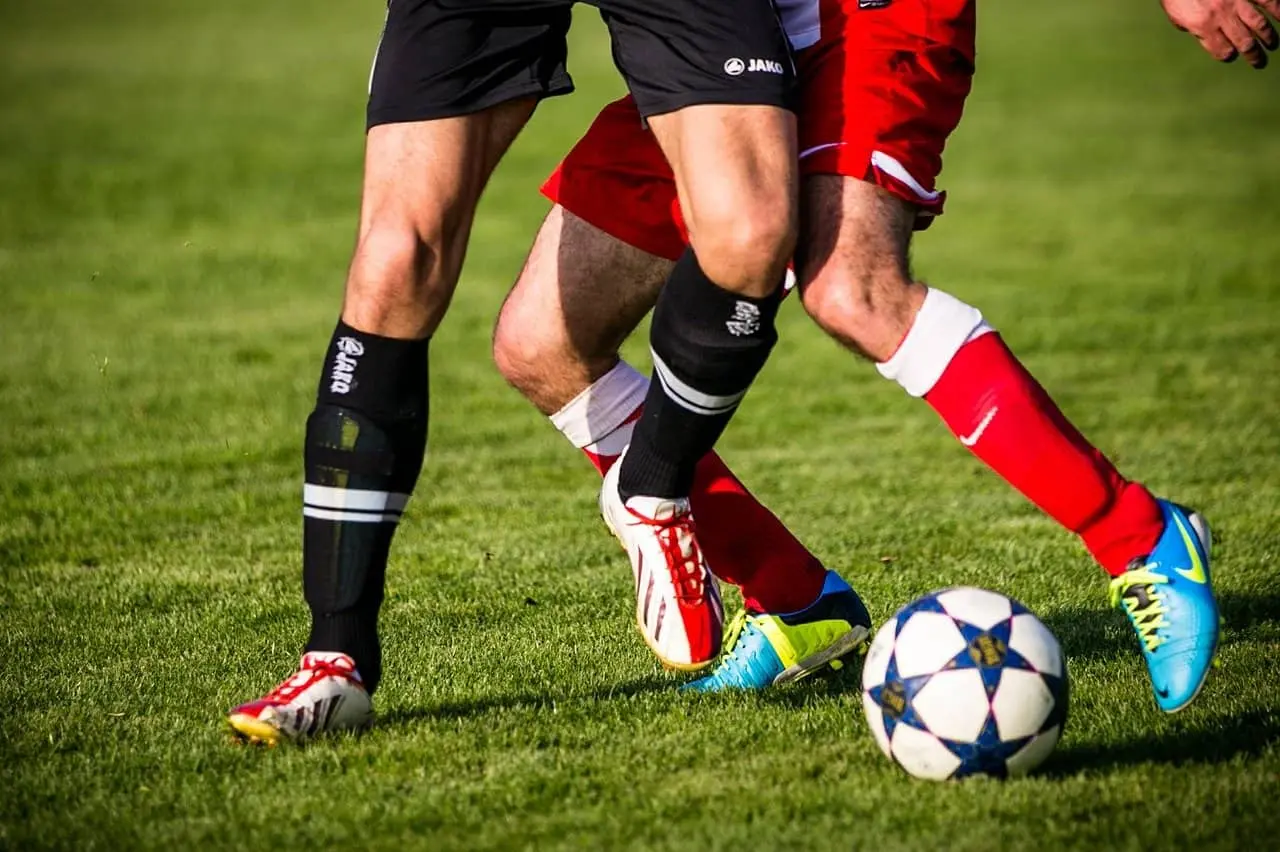
Football is the most popular sport in the world, with 265 million registered players worldwide, according to FIFA data. In countries without a football tradition, such as the United States of America, it is also a sport that has enjoyed rapid growth among both fans and players. Football is a complex sport with aerobic-type exercise; it develops teamwork and contributes significantly to the development of strength, balance, agility and coordination.
In general, football is a safe physical activity compared with other sports. For example, in 2017 the total number of football injuries in the USA was 50% of the number of basketball injuries. Around 210,000 players attended an emergency department, of whom 45% were in the 5-14 age group[1].
The injuries seen in football players, and not only in them, are either acute – occurring during play – or chronic – with problems developing over time as a result of overuse. The most common acute injuries include: abrasions and bruises, sprains and muscle strains (most often around the ankles and knees), fractures and head and neck injuries. Most acute injuries are minor and can be treated with short periods of rest, ice and elevation. Overuse injuries can be treated with short periods of rest, which means athletes can continue to play and train in some capacity.
The most worrying injuries are concussions or traumatic brain injuries. For example, a minor brain injury, which may be caused by a collision with another participant, with the ground or the goalpost, or by heading the ball, can cause the following: loss of consciousness, headaches, confused thinking, dizziness, memory and balance problems, nausea and double/blurred vision, etc. If a concussion is suspected, the player is taken off the pitch and transported to a medical centre for proper assessment, taking care to avoid second impact syndrome[2].
The return to sport is gradual. For young players, several football leagues have banned or limited heading the ball. Many programmes have also begun to require the use of head protection for juniors, both girls and boys.
General Symptoms of Musculoskeletal Injuries
The general symptoms of musculoskeletal injuries include: pain during activity, pain at rest, stiffness, swelling and loss of the normal range of motion, and a decrease in strength or speed.
Upper limb injuries depend on how the player falls. Wrist fractures and sprains are more common in goalkeepers. Other injuries seen in football are: shoulder dislocations, acromioclavicular joint separations and collarbone fractures. The diagnosis and appropriate treatment will be established by the doctor following a clinical and paraclinical assessment: X-ray, ultrasound, CT, MRI.
The most common lower limb injuries in football are ankle sprains. If a fracture is suspected, the player must not bear weight on the leg until an X-ray has been taken. Once weight-bearing is allowed, the athlete works on strengthening the ankle, agility drills and maintaining flexibility of the ankle and lower limb, then on ball technique, progressing from jogging to running and sprinting.
Because football involves long runs and sudden turns, the muscles and ligaments of the lower limb are subjected to increased forces, in addition to direct falls and collisions. In children, Sever's disease or calcaneal apophysitis is common, caused by traction of the Achilles tendon, which inflames part of the back of the heel.
The injuries are varied, including kneecap dislocations, cruciate ligament injuries (more often the anterior) and collateral ligament injuries, depending on the movement performed. Players may hear a popping sound and feel intense pain, followed by swelling, reduced mobility and difficulty walking. Initial treatment involves immobilisation and local ice, followed by a specialist medical consultation. Meniscal injuries are also common in football, this fibrous structure acting as the knee's shock absorber. Meniscus injuries are on the rise in children, because more and more of them are taking part in organised sport.
Chronic or overuse injuries of the lower limb include: medial tibial stress syndrome or shin splints, patellar tendinitis or jumper's knee, and Achilles tendinitis.

The 3 Ps: Preparation, Prevention, Protection
Preparation includes: maintaining fitness, muscle-strengthening exercises for the muscles around the knee (thigh, calf and quadriceps), appropriate stretching at the end of matches or training sessions, and proper hydration.
Prevention involves aspects such as: ensuring ideal pitch conditions and resolving any problems with the pitch before the match begins, as well as players adhering to a set of rules to protect the whole team. The ball must also be suited to the weather conditions, and when playing after rain the use of synthetic balls is recommended.
Protection is often treated superficially, with players tending to play without proper equipment, for example wearing footwear unsuited to the playing surface or not wearing shin guards. In children, particular attention must be paid to the size of shin guards and football boots. Optimal hydration must also be maintained; the general recommendation is to drink around 700 ml of non-caffeinated fluids two hours before training and around 250 ml of water or a vitamin drink just before matches[3].
How should periods of inactivity be approached?
After long periods of inactivity, a gradual progression towards intense activities such as full matches is needed. During time away from matches, the athlete should include strength exercises, agility training and general conditioning. If the athlete has lost fitness, then the player must gradually increase their level of activity, progressively reaching a higher level of fitness.
Particular attention must be paid to children returning to sport, as collisions are very common among younger players and can lead to concussion. Each child also has their own growth rate, and training must be adapted to each child's level. Muscle fatigue is more common in children and adolescents who return to sport without prior consistent training.
The routine of any player – professional or amateur, child or adult – involves a proper warm-up before play and training. A serious warm-up not only improves performance but has been shown to halve injuries when performed correctly and regularly. Over the years, starting in 1980, several prevention studies have been developed by Ekstrand et al, covering topics such as the prevention of specific injuries, for example sprains or trauma in football.
The 11+ Warm-up Developed by the FIFA Medical Assessment and Research Centre
In 2009, the FIFA Medical Assessment and Research Centre (F-MARC) developed, in cooperation with other research groups, a general warm-up grouped into three parts, called 11+. Here is how it is structured:
- Part I consists of a series of 6 light running exercises that should take around 8 minutes.
- Part II includes 6 strength-oriented exercises, taking the form of plyometric and balance training, which should last around 10 minutes. Each of these 6 exercises has 3 levels of progression that encourage players to improve their skills and capacity.
- Part III comprises another 3 running exercises, more intense than those performed in Part I, and should last around 2 minutes.
Before playing a match, only the running exercises are performed, for around 10 minutes. How does the programme work?
The warm-up area for Part I involves marking out two parallel lines made up of a set of 6-10 cones, placed around 5-6 metres apart. Players complete the course in pairs, with each pair starting when the pair in front has passed the second cone. At the end of the course, the player jogs back to the start, with the running speed increasing with each set of exercises[4].
With children, the coach supervises and ensures the following:
- The exercises are performed correctly;
- Players have good body control and proper posture;
- Players control the position of the knee during the exercises, including straight alignment of the leg and the position of the knee over the toes. Also, during soft landings, the knees should not collapse inwards, thus avoiding a genu valgum (knock-knee) position.
Incorporating the exercises described above has helped reduce severe injuries by up to 50% and total injuries by up to 33%. Moreover, it is important to include stretching at the end of training sessions, because it helps reduce muscle soreness while maintaining muscle flexibility and length. Although many athletes neglect this part because of their busy schedules, stretching after training or a match must be prioritised, as it reduces the risk of trauma or injury[3].
Official Injury Statistics from the UEFA Report
The number of official matches played each season by professional players is constantly rising. For example, the team that won the European Cup in the 1970s played 40 matches in a season, whereas today's players have over 70 matches under their belt every season[5].
The UEFA elite club injury report for the 2018-19 season presents relevant information on the types of injury sustained by players, their rates and the number of days of absence. On average, the teams assessed had 21 training sessions and 4.9 matches each month, with a ratio of 6 hours of training for every hour of official play. In total, they reported 868 injuries, of which 53% occurred during matches, 20% were severe injuries requiring more than 28 days out, and 15% were ligament injuries[5].
Around 60% of injuries were to the lower limb, 65% were traumatic injuries, and around 40% were of moderate severity (requiring 8-28 days out). The re-injury rate averaged 10%[6]. The average number of injuries during training was 1.7 injuries/1,000 hours of training, compared with 21 injuries/1,000 hours of official match play.
46% of muscle injuries occurred in the hamstrings, of which 85% were minimal, mild or moderate, with a re-injury rate of 10%. Around 55% of ligament injuries occurred at the knee, 22% of these being severe, with a re-injury rate of 8%. The average ligament injury rate across all teams was 1.6 per 1,000 match hours, with individual rates ranging from 0.1 to 2.9 depending on the club.
The average period of absence caused by muscle injuries was 18 days, ranging from 10 to 29 days depending on the club. Ligament injuries involved an average absence of 23 days, ranging from 11 to 33 days depending on the club. Over the 2018-19 season, the injuries suffered by players across all clubs resulted in an average of 1.7 missed training sessions per player (between 0.1 and 3.8) and an average of 0.4 missed matches per month (between 0.1 and 0.9).
A 2019 study also showed that teams without a winter break during the season had a higher incidence of injuries[7]. FIFPro (the International Federation of Professional Footballers) has recommended the following to professional teams: a mandatory 4-week off-season break, a 2-week winter break and a limit on the number of matches per season, with players having no fewer than 5 days of recovery between 2 matches. Consideration is also being given to setting a maximum number of matches that players may play in a season, and to developing an early warning system to monitor the load of each match/player[8].
In the case of children, parents should limit the number of sports and/or teams they take part in, because of the increased risk of overuse conditions. It is also recommended that children do not play intense sport all year round, as holidays and rest periods are necessary[3].
Sources
[1] I. I. Institute, „https://www.iii.org/fact-statistic/facts-statistics-sports-injuries,” 2017. [Online].
[2] A. Brayer, „https://www.urmc.rochester.edu/news/story/2611/prevent-injuries-by-preparing-kids-to-get-back-in-the-game.aspx,” Sept 2019. [Online].
[3] AAOS (American Academy of Orthopedic Surgeons), „https://orthoinfo.aaos.org/en/staying-healthy/soccer-injury-prevention,” 2020. [Online]. [Accessed APR- MAY 2020].
[4] Kirkendall DT, Junge A and Dvorak J, „Prevention of Football injuries,” Asian J of Sports Med, vol. 1, no. 2, pp. 81-92, 2010.
[5] C. Penas, „https://barcainnovationhub.com/winter-break-and-injuries-in-elite-football/,” Dec 2019. [Online].
[6] U. E. C. I. Study, „2018/2019 Season Report Team X,” UCIS, Sweden,Switzerland, 2019.
[7] S. A. D. M. Ekstrand J, „Elite football players that do not have a winter brea lose on average 303 player-days more per season to injuries than those teams that do: a comparison among 35 professional European teams,” Br J Sports Med, vol. 53, pp. 1231-5, 2019.
[8] FIFPro, „https://www.fifpro.org/media/bffctrd1/at-the-limit.pdf,” 2019. [Online].

Dr. Ion Bogdan Codorean
Consultant in orthopaedics and sports traumatology. Doctor of Medicine (PhD).
View profileNewsletter subscription
Sign up for free to the Artro Sport newsletter!