
Shoulder pain can have many different causes and may arise in the shoulder joints themselves or in the muscles, ligaments and tendons that surround them. As a rule, pain originating in the shoulder joints gets worse as you move your arm or shoulder.
Read on to find out what can cause shoulder pain and how it presents, as well as how shoulder pain is treated and how it can be prevented.
The anatomy of the shoulder
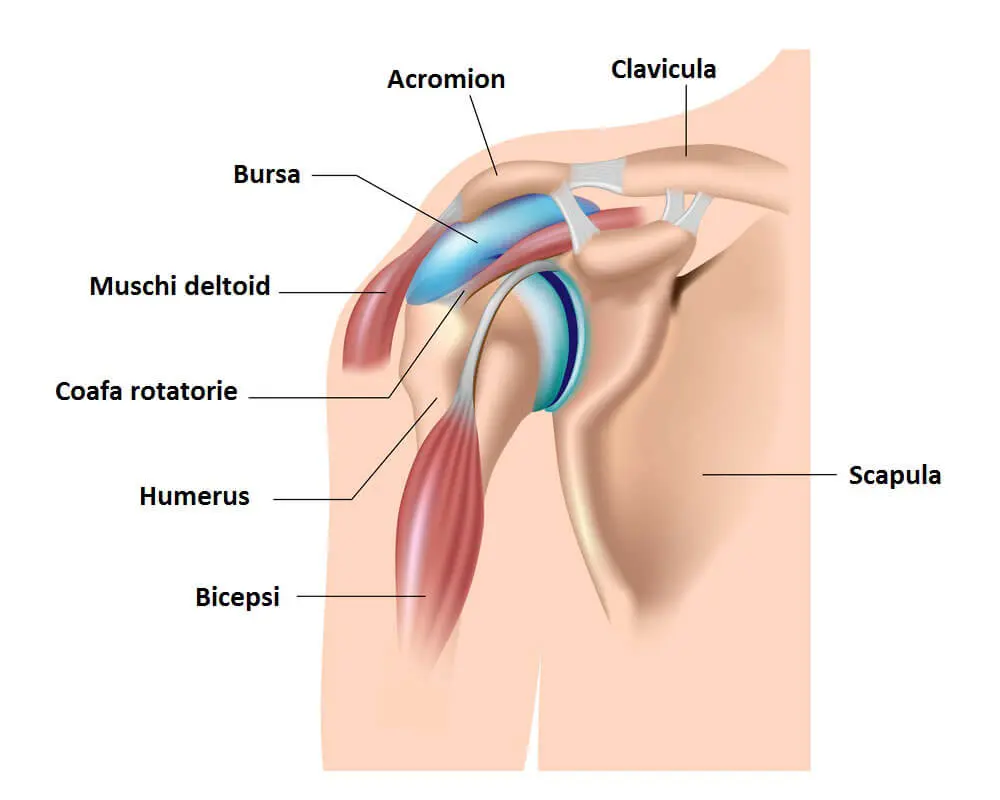
The shoulder is made up of a series of complex joints and bones. When something goes wrong, the ability to move the arm and shoulder is affected, causing discomfort and pain.
In terms of anatomy, the shoulder comprises three main bones:
- The humerus (the upper arm bone);
- The clavicle (collarbone, which forms part of the acromioclavicular joint);
- The scapula (shoulder blade).
The humerus sits within the scapula, much like a ball in a socket. These bones are covered with a layer of cartilage.
The two main joints of the shoulder are the acromioclavicular joint and the glenohumeral joint. The acromion is located at the highest point of the scapula and clavicle, while the glenohumeral joint is formed by the upper part of the humerus and the outer edge of the scapula. This area is known as the shoulder joint and has the greatest range of motion of any joint in the body. It is what allows the shoulder to move forwards and backwards, in a circular motion and upwards.
The rotator cuff also allows the shoulder to rotate. It holds the head of the humerus in the joint and consists of a network of four muscles and several tendons that cover the humeral head. Tendons are tissues that connect muscle to bone. When the tendons or muscles around the rotator cuff are damaged or inflamed, it can be painful or difficult to lift your arm above your head.
What causes shoulder pain
There are many factors that can lead to shoulder pain. The shoulder can be injured through physical exertion in manual work, through sport or even through repeating the same movement over and over. Certain illnesses can also cause pain to radiate to the shoulder.
Here are some of the most common causes of shoulder pain:
Rotator cuff injuries (tendinitis)
This is one of the most common causes of shoulder pain and involves inflammation of the tendons. Injuries can occur after a significant trauma, but also when the arms are overused through overhead lifting, playing sport or performing repetitive movements.
A tear may be partial, where only part of the tendon has come away from the bone, or complete, where the tendon is fully detached from the bone.
Tendinitis can develop over the years as a result of holding the shoulder tense in a particular position for long periods, sleeping on one side or carrying out activities that involve raising the arms.
Calcific tendinitis (inflammation of the tendon)
This involves the formation of calcium deposits on the shoulder tendons, with the surrounding tissue becoming inflamed. Calcific tendinitis of the shoulder is common in people over 40.
Although the exact cause of the calcium deposits is not known, one possible reason is the healing process of a displaced ligament. Calcific tendinitis causes severe pain that appears in the morning and is common among adults and people with diabetes.
Frozen shoulder (adhesive capsulitis)
Adhesive capsulitis, commonly known as frozen shoulder, is caused by thickening of the tissues around the shoulder joints, which become stiff. It is common in people aged between 40 and 60, particularly women and people with diabetes, high cholesterol or thyroid disorders.
Osteoarthritis
This condition usually affects the knees or hips, but it can sometimes affect the shoulder as well. Osteoarthritis occurs when the layer of cartilage covering the bones gradually wears away, until the bones begin to rub against each other.
Bursitis
This occurs when the fluid-filled synovial sac (bursa) that cushions certain parts of the bones, tendons and ligaments in the shoulder accumulates excess fluid. Bursae reduce friction between muscle and bone, acting as cushions between the bones and the soft tissues. Bursitis usually occurs alongside rotator cuff injuries.
Sometimes shoulder pain can be caused by other injuries in the neck or biceps. In these cases, the pain should not get worse when you move your shoulder.
Other causes of shoulder pain may include:
- Subacromial impingement syndrome;
- Bacterial infections;
- Various forms of arthritis;
- Cartilage tears;
- Bone spurs (small bony growths that form along the edges of bones);
- A trapped nerve in the neck or shoulder;
- Myofascial pain syndrome;
- Brachial plexopathy;
- Osteomyelitis (bone infection);
- Fracture of a bone in the shoulder or arm;
- Shoulder dislocation;
- Spinal injuries;
- Cardiovascular disease;
- Respiratory conditions (asthma, pulmonary hypertension);
- Digestive conditions (gastro-oesophageal reflux causes heartburn, which can produce pain that radiates to the shoulders, neck and back).
Shoulder problems usually appear as we get older, particularly after the age of 60. This is because the tissues surrounding the shoulder begin to deteriorate as we age.
Risk factors
Risk factors that can increase the likelihood of shoulder pain include:
- Repetitive movements;
- Overuse of the shoulders through activities that involve raising the arms;
- Poor shoulder posture (when walking or sitting);
- Shoulder trauma (bone fractures, ligament tears, fracture of the clavicle);
- Playing sport.
How shoulder pain presents
Depending on the severity of the problem, shoulder pain can be mild or severe. The pain may be felt deep in the shoulder joint, at the back or front of the shoulder and in the upper arm. As a rule, the pain is felt when moving the shoulder or arm.
Shoulder pain may be accompanied by the following symptoms:
- A feeling of weakness in the shoulder or arm;
- Tingling or burning sensations;
- Stiffness in the joints;
- Reduced mobility of the arm and shoulder.
How shoulder pain is diagnosed
To diagnose shoulder pain, the doctor will take the patient's medical history to find out the circumstances in which the pain occurs, whether the shoulders have been overused or whether there are any injuries.
The next step is a physical examination to test local tenderness, the ability to move the shoulder, the stability of the joints and the presence of inflammation.
Imaging tests such as magnetic resonance imaging (MRI) or X-rays help to obtain clear images of the structures of the shoulder for an accurate diagnosis.
During the consultation, the doctor may ask questions to find out whether the shoulder pain came on spontaneously, whether it radiates to other parts of the body or whether it is also felt when the patient is at rest.
You should contact your doctor if other symptoms appear, such as fever, an inability to move the shoulder, bruising, warmth or tenderness around the shoulder joints, or if the pain persists despite treatment.
It is important to remember that if the shoulder pain is not associated with an injury, it could be a sign of a heart attack. Symptoms associated with a heart attack include difficulty breathing, chest pressure, dizziness, excessive sweating and neck pain.
Treatment of shoulder pain
Orthopaedic treatment for shoulder pain depends on its cause and severity. In most cases, shoulder pain can be treated at home. Other treatments include physiotherapy, anti-inflammatory medication, injections or surgery.
Physiotherapy
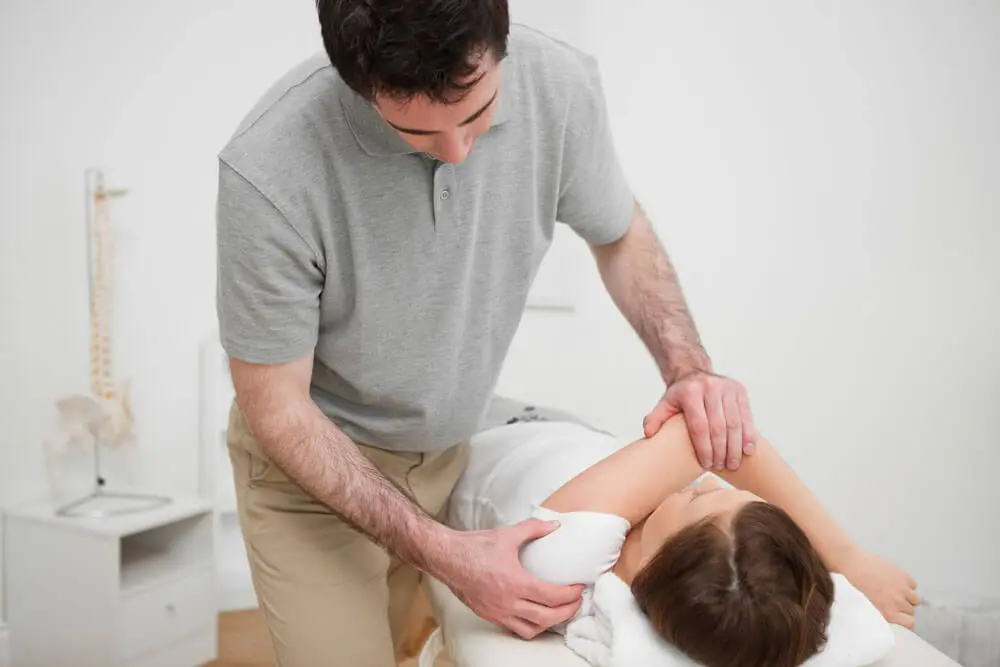
Physiotherapy helps to treat stiffness and weakness in the shoulder and is the first stage of treatment for shoulder pain. Its aim is to improve the patient's comfort so that they can return to their daily activities.
Anti-inflammatory medication
These help to reduce pain so that the patient can attend physiotherapy sessions more easily and perform the necessary exercises. Medication should only be taken on a doctor's recommendation and for a short period. If the pain persists, a medical check-up is recommended to see whether a different treatment is needed.
In some situations, the doctor may recommend a corticosteroid injection to relieve the pain. However, it is important to bear in mind that there may be side effects, although most people tolerate this type of treatment well during recovery.
Injections
Injections involve administering a fluid, based on saline solution and steroids, into the shoulder joints. They help to relieve symptoms and improve shoulder movement. A treatment combining injections and physiotherapy increases the rate of healing and pain relief.
Surgery
If shoulder pain does not improve with other treatments, surgery may be necessary. The two types of surgery for treating shoulder pain are the arthroscopic procedure and open surgery.
- Arthroscopic procedure – the orthopaedic surgeon inserts a thin device fitted with a camera and a light source into the joint. The procedure requires small incisions to insert the device and, if needed, other instruments with which the surgeon repairs the damaged joint structures.
- Open surgery – involves incisions that are much smaller than in the arthroscopic procedure and has a higher success rate.
Recovery requires a period of shoulder immobilisation together with appropriate treatment. This can take a few weeks for minor injuries and up to several months if the injury was severe.
Throughout the recovery period, rest is recommended and activities that may cause shoulder pain should be avoided.
Remedies to ease shoulder pain
In most cases, unless the shoulder pain is severe, an alternative approach can be followed:
- Ice packs – low temperatures help to reduce inflammation and pain. Cold compresses should be applied for 15 to 20 minutes, three or four times a day. The ice should be wrapped in a towel rather than applied directly to the skin, as it can cause frostbite.
- Turmeric – this has anti-inflammatory and antioxidant properties and can help to relieve shoulder pain. Turmeric capsules should only be taken on medical advice, with the doctor recommending the correct dose. It is important to remember that they cannot be taken at the same time as blood-thinning medication.
- Moderate exercise – movement is needed to improve shoulder mobility. Exercises should be moderate and performed regularly. The doctor may recommend a series of exercises depending on the severity of the pain.
- Massage – this helps to improve blood circulation and reduce inflammation in the shoulder. Olive, sesame or coconut oil, gently warmed before being applied to the shoulders, is recommended. The shoulders are massaged by gently squeezing the muscles for 10 minutes. The massage can be repeated several times a day.
- Acupuncture – this helps to reduce inflammation and improve shoulder movement. Acupuncture involves inserting needles into the affected area and is considered a form of treatment that stimulates the muscles and blood flow and promotes healing.
How to prevent shoulder pain
Some of the measures that can reduce the risk of shoulder pain are:
Gait and posture analysis
The way we walk plays an important role in body posture and in preventing other conditions. The entire weight of the body rests on the feet, and if they are not doing their job properly, shoulder pain can develop, along with other problems affecting the spine, muscles, head or teeth.
Gait analysis is designed to correct poor posture by analysing the entire walking process. The data are then processed to help create custom-made orthopaedic insoles for each individual patient. Wearing these orthopaedic insoles improves the walking pattern and reduces the risk of conditions associated with poor posture.
Regular exercise
Exercising regularly helps to release muscle tension and improve blood circulation in the shoulder. Stretching exercises are recommended to relax the muscles surrounding the joints.
One recommended exercise involves making small circles with the arm, without straining the shoulder too much. You can also swing the shoulder forwards and backwards, keeping the arm down by your side.
Last but not least, regular medical check-ups can help to detect any health problems early, especially those that lead to gradual deterioration of the shoulder joints.
Photo source: Shutterstock
Orthopaedics Clinic Bucharest
Congenital or acquired conditions of the musculoskeletal system, from diagnosis through to rehabilitation, are treated by the team of orthopaedic surgeons at Artro Sport Clinic.
Whether traumatic or non-traumatic in nature, our orthopaedic specialists can offer the best medical solutions for orthopaedic problems.
Find out more
Dr. Ion Bogdan Codorean
Senior consultant in orthopaedics and sports traumatology. Doctor of Medicine (PhD).
View profileNewsletter subscription
Sign up for the Artro Sport newsletter free of charge!