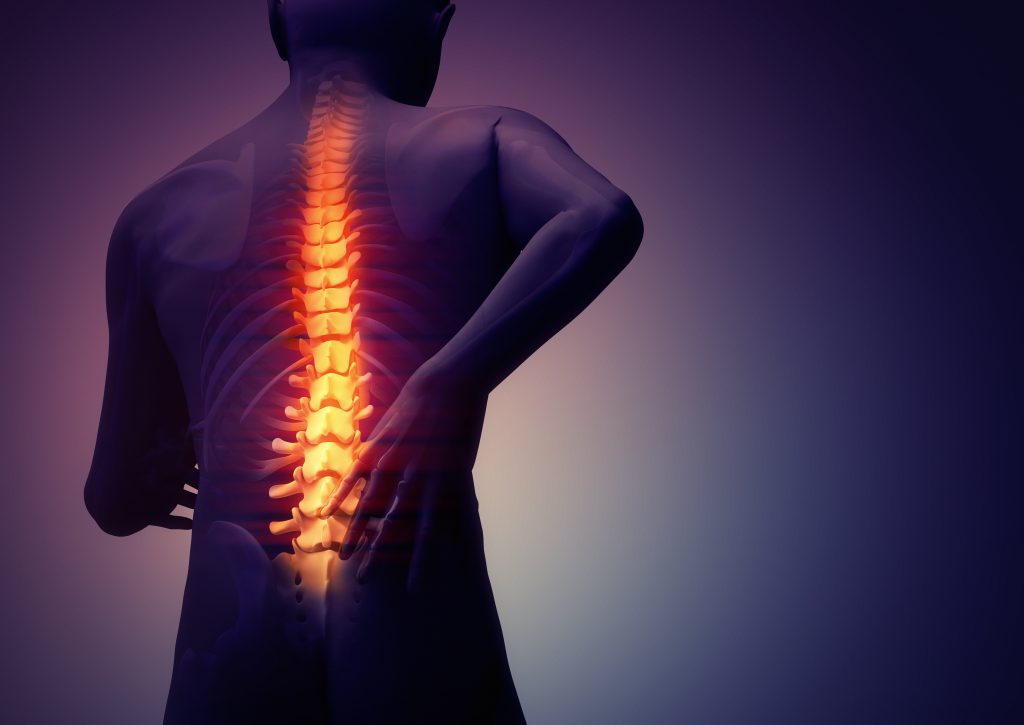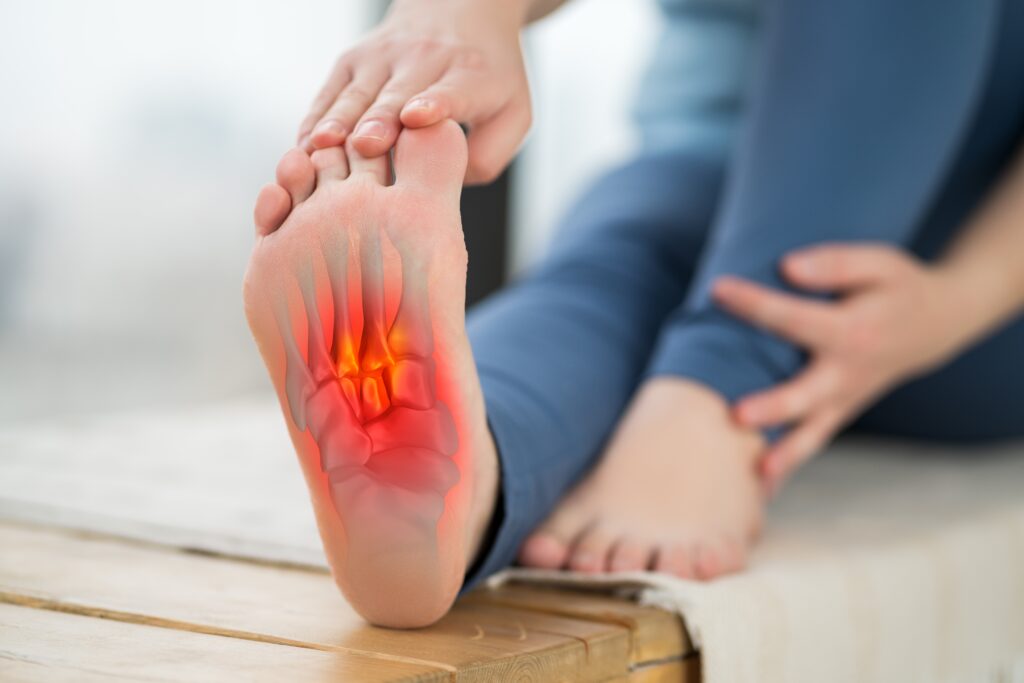
An injection (infiltration) is a technique in which a specific substance is injected into the knee. Knee pain can sometimes be debilitating and difficult to treat. Knee injections are a commonly used way of relieving pain and reducing joint inflammation. The effects of this technique can also last for up to several months.
Joint injections should only be performed by experienced doctors and in specialised medical practices. The outcome of joint injections depends on the condition being treated and on the type of substance injected. Intra-articular injections do not replace surgery or other specific treatments when these are needed.
Results may vary from patient to patient.
General information about knee injections
Knee pain is a very common problem, affecting young and older people alike. Among athletes, knee pain can be a real nuisance in sports that involve running and twisting.
In older people, the cartilage, which acts as a protective cushion for the knee, often wears down and causes chronic pain and stiffness.
Knee injections are an effective treatment for certain joint conditions and are used in sports medicine and to ease the symptoms of some inflammatory diseases.
Several types of substances are used for these injections. These may be: hyaluronic acid, PRF, stem cells or corticosteroids.
Knee injections can also have side effects. Most often these are local reactions, such as pain and swelling of the knee – which usually disappear within the first 48 hours – and, occasionally, infections can occur.
Conditions for which injections are recommended
Knee injections may be recommended in the treatment of certain conditions. These include:
Synovitis
This occurs when the membrane lining the inside of the capsule of mobile joints (the synovium) becomes inflamed. This inflammation is often triggered by other conditions, such as: a systemic disease (such as systemic lupus erythematosus), inflammatory arthritis (ankylosing spondylitis, rheumatoid arthritis), gout or articular chondrocalcinosis.
An inflamed synovium can cause erosion of the underlying bone, and inflammatory nodules may sometimes appear.
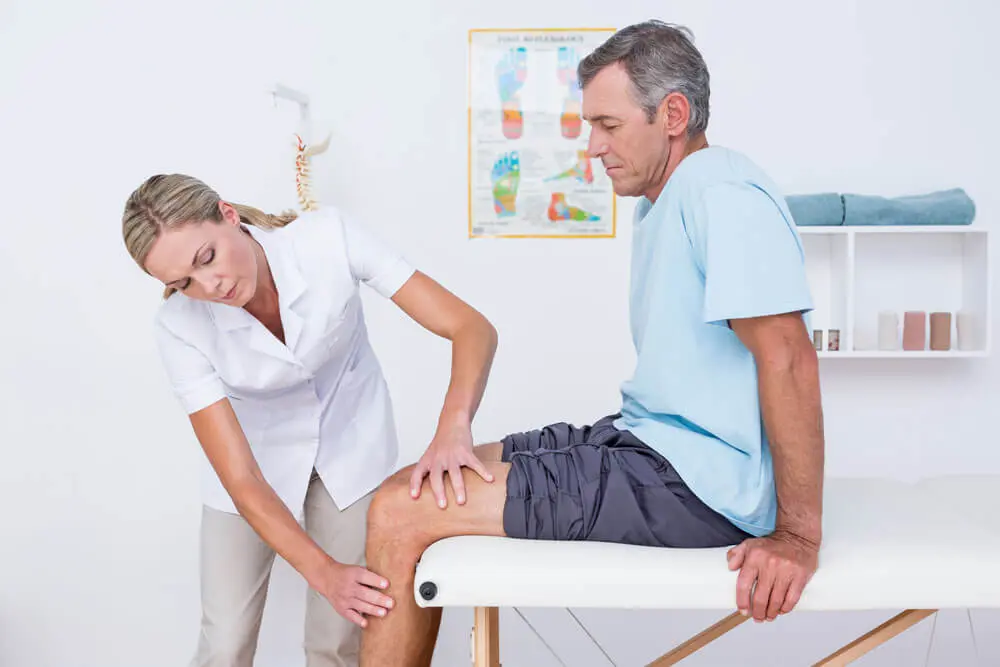
Bursitis
Bursitis is an acute or chronic inflammation of a bursa. A bursa is a sac filled with lubricating fluid located between tissues, bones, muscles, tendons and skin. Bursae are also found in the knee, where they act as protective cushions. When these small sacs become inflamed, bursitis develops, a condition that causes pain, which can sometimes be severe.
This condition occurs mainly in people over the age of 40 and is caused by repetitive impact or a serious injury in a particular area. Overuse can encourage the development of bursitis.
Activities that can lead to this condition include: painting, carpentry, gardening, shovelling and so on. Sports such as tennis, golf and skiing can also encourage the development of bursitis.
A person who suffers from rheumatoid arthritis, gout, psoriatic arthritis or thyroid disorders has a higher risk of developing bursitis.
Gouty arthritis
Also known as gout, gouty arthritis is a condition that causes severe joint pain. It occurs when there is too much uric acid in the blood and tissues. More precisely, gout appears after years in which uric acid crystals have gradually been deposited in the joints and the surrounding tissues.
Gout can cause symptoms such as itchy skin, night pain, fever and chills. It occurs mainly in men over the age of 40.
Gonarthrosis
Gonarthrosis, also known as osteoarthritis of the knee, is a common degenerative joint disease of the knee, which usually occurs in people over 60 years of age, with a higher prevalence in women. In gonarthrosis, the knee cartilage degenerates.
Gonarthrosis is very painful, causing swelling and problems moving the joint. As the disease progresses, the joint space narrows until it disappears.
In the final stages of gonarthrosis, the cartilage wears away, leading to "bone on bone" friction, which results in bone lesions, local inflammation, stiffness, reduced mobility, joint deformity, the formation of bone "spurs" and more severe pain.
Although it most often occurs in older people, it is sometimes also present in younger people. Osteoarthritis of the knee can occur after trauma or an infection, it can be hereditary, or it can occur in people who are overweight.
Athletes are also more prone to developing gonarthrosis, especially those who practise pivoting sports on hard surfaces. Osteoarthritis can occur in people with rheumatoid arthritis and in those with various metabolic disorders (in people with excess iron or excess growth hormone).
Tendinitis
This is a degenerative condition involving inflammation of a tendon. Overuse of the tendons leads to the development of this condition. Tendinitis can also be caused by systemic diseases, such as rheumatoid arthritis, systemic sclerosis, gout, reactive arthritis or diabetes.
Tendinitis presents with pain and tenderness on palpation.
Others
Knee injections may be recommended to treat the symptoms of other conditions that can cause knee pain.
Types of injections
Several types of injections can be used to relieve the symptoms of knee conditions. The injections may contain:
Hyaluronic acid
Hyaluronic acid is beneficial to the cartilage and acts as a lubricant and protective cushion in the knee. It is used in patients with early gonarthrosis, in patients with small cartilage lesions or in patients who have undergone surgery for cartilage lesions (chondropathy).
PRF (platelet-rich plasma) injections
These are injections of platelet-rich plasma, which is obtained from the patient's own blood. A certain amount of blood is collected and centrifuged; the centrifugation yields a concentrate of growth factors, which is then injected into the knee.
Stem cell injections
Stem cells can be harvested from the iliac crest, from abdominal fat or from the cartilage of the ear. Both PRF and stem cells stimulate the body to form new tissue and slow down the progression of osteoarthritis. See how stem cells are harvested.
Corticosteroid injections
These are designed to be similar to cortisol, the natural hormone produced by the body. The purpose of corticosteroids is to reduce inflammation in the body. A corticosteroid injection takes effect within two weeks and lasts for up to 24 weeks.
A corticosteroid injection relieves pain and inflammation in the knee. The action of the injection is prolonged, thanks to small crystals found in the injected medication, which dissolve gradually over the week following the injection.
It is very important that the injection is performed correctly, because otherwise those crystals can be a source of pain for one or two days after the injection. In this case, anti-inflammatory medication is given until the injection takes effect.
Arthrocentesis or joint aspiration
This is the procedure by which a sample of the fluid in the joint is collected. The sample can be analysed to determine the causes and triggers of the effusion (fluid in the joint). This procedure is performed in a number of situations – before a joint injection, in patients with a swollen knee in whom we want to relieve the pressure and pain in the knee, or when we want to learn more about the nature of the intra-articular fluid.

How the procedure is carried out
The injection is a simple procedure that does not take long. After disinfecting the area, the doctor inserts a needle and syringe, with which they will try to draw off any excess fluid from the knee, then inject the medication through the same needle into the target area and apply a plaster over the site.
After the injection, the patient will need to move the knee a few times to help the substance spread through the joint. The injection is usually only slightly painful, but some patients may feel more intense pain.
A small percentage of patients who undergo an intra-articular aspiration/injection have local reactions, which present as swelling of the knee and increased pain, and which usually disappear within 48 hours at most.
What the results are
The effectiveness of this treatment varies from person to person, and one factor is how advanced the disease that triggered the knee pain is. The earlier in the course of the condition the injection is performed, the better the result will be.
The patient will need to avoid physical exertion for the following 48 hours.
Side effects
Side effects can sometimes occur after an injection, and they differ depending on the substance injected.
Side effects – corticosteroids
It is advisable to have corticosteroid injections no more than 3 times a year. Injecting corticosteroids into the knee can have side effects, such as:
Swelling of the area immediately after an injection
This is caused by the needle of the syringe and normally subsides quickly if the doctor's instructions are followed. If it lasts more than a day, the patient is advised to contact the doctor.
Nerve damage
Rarely, a cortisone injection can lead to damage to the nerves in the area.
Thinning of the nearby bone
Another possible side effect is thinning of the nearby bone, which makes the area more sensitive.
Side effects – arthrocentesis or joint aspiration
Joint aspiration can also have side effects. Contact your doctor if you experience any of these symptoms:
Bruising of the area
There is a risk that the area where the joint aspiration was performed will bruise.
Swelling of the area
As with any injection, there is a chance that the area will swell temporarily after the aspiration.
Infection at the site where the synovial fluid was aspirated
This is a rarer side effect, but one that requires appropriate treatment. If the site where the synovial fluid was aspirated has become infected, you should see a doctor as soon as possible.
Side effects – hyaluronic acid
Hyaluronic acid injections can also cause side effects. Even though they are fewer than with injections of other substances, they can be quite bothersome.
Mild skin reactions in the area where the substance was injected
These pass fairly quickly and do not usually cause any major problems.
Flare-ups of arthritis occurring immediately after the injection
After a hyaluronic acid injection, flare-ups of arthritis can sometimes occur shortly after the injection.
In summary, knee injections can be helpful for those suffering from severe knee pain, but they do not treat the disease that triggered the pain.
Photo: Shutterstock
Orthopaedics Clinic Bucharest
Congenital or acquired conditions of the musculoskeletal system, from diagnosis through to rehabilitation, are treated by the team of orthopaedic doctors at Artro Sport Clinic.
Whether they are traumatic or non-traumatic in nature, our orthopaedic doctors can offer the best medical solutions for orthopaedic problems.
Find out more
Dr. Ion Bogdan Codorean
Consultant in orthopaedics and sports traumatology. PhD in medicine.
View profileNewsletter subscription
Sign up for the Artro Sport newsletter free of charge!