An inguinal hernia is a condition in which the contents of the abdomen (frequently loops of bowel) protrude through an enlarged anatomical opening in the inguinal canal. It may be present from birth (congenital) or develop later in life (acquired).
What is an inguinal hernia and why does it occur?
An inguinal hernia is a condition that patients themselves can notice. It appears as a lump in the groin area that comes and goes depending on body position. It is most noticeable when standing and during exertion that increases pressure in the abdomen, and it may disappear when lying down. We speak of an inguinal hernia when organs from the abdomen push into the inguinal canal through an anatomical opening in the abdominal wall.
The symptoms of an inguinal hernia (more common in men) may have causes such as:
- intense physical exertion
- weakening of the musculo-aponeurotic tissue through age or neoplasia
- increased pressure in the abdominal cavity (obesity)
Types of inguinal hernia
There are two types of inguinal hernia, depending on the cause:
- Direct
- Indirect
An indirect inguinal hernia develops at the internal ring, lateral to the inferior epigastric vessels, where the spermatic cord in men and the round ligament in women enter the abdomen. Although they can occur at any age, indirect inguinal hernias are most often congenital.
A direct inguinal hernia occurs medial to the inferior epigastric vessels. This type of hernia is usually acquired and is more common in older people. A direct hernia develops through an acquired defect in the groin.
Causes of inguinal hernia
As mentioned above, one of the causes of inguinal hernia is the weakening of the abdominal muscles with age. People who are obese or have certain chronic conditions (chronic constipation, chronic cough, prostate adenoma, liver cirrhosis, etc.) can develop an inguinal hernia when the abdominal walls are weakened; a sedentary lifestyle is another cause of inguinal hernia.
On the other hand, intense physical exertion and certain repetitive movements in sports such as tennis, hockey or football can also lead to the development of an inguinal hernia. As for indirect hernias, the main cause is failure of the inguinal canal to close.
Main symptoms of an inguinal hernia
Initially, the hernia contents move freely through the opening and the hernia may cause no symptoms; however, this condition does not heal on its own and, if left untreated, can lead to serious complications (strangulation of the bowel loop, necrosis with perforation and peritonitis) that can put the patient's life at risk.
Symptoms of an inguinal hernia may include:
- a bulge in the abdominal wall in the groin area, made more prominent by coughing and standing up, lifting weights, bending forward, etc.
- a feeling of pain, pressure or burning, worsened in the same situations.
In some situations, "warning" symptoms may appear, signalling possible complications of the hernia. These may include:
- vomiting
- constipation
- fever/chills
- severe pain that increases in intensity
- a change in the colour of the skin over the hernia (reddish-purple, black).
Risk factors
Risk factors that favour the development of an inguinal hernia include:
- Family history. A person with close relatives who have had a hernia is much more likely to develop the condition themselves.
- Men are more exposed to inguinal hernia.
- The abdominal walls can be weakened by pregnancy, favouring increased pressure in this area.
- Obesity is a major risk factor for developing an inguinal hernia.
- Certain chronic conditions (chronic constipation, chronic cough, prostate adenoma) are risk factors for inguinal hernia.
Progression of an inguinal hernia and medical consultation
Once any of the symptoms mentioned above have appeared, a consultation with a surgeon is recommended in order to establish the diagnosis of inguinal hernia and to treat it. For the diagnosis, in addition to the discussion with the doctor and the clinical examination, the specialist may need investigations such as blood tests or an inguinal (abdominal wall) and abdominal ultrasound.
A common mistake is the belief held by some patients that "if I wear a belt/truss I won't need surgery". However, these makeshift forms of treatment do not correct the defect.
Seeing a surgeon early and scheduling the operation avoids the complications mentioned (incarceration, loss of domain through excessive enlargement of the hernia, strangulation).
Treatment and recovery after an inguinal hernia
The recommended treatment for an inguinal hernia is laparoscopic or open surgery, usually using a synthetic mesh, following an informed discussion with the patient and a joint decision on the method.
Minimally invasive laparoscopic repair (either TEP or TAPP) involves, under general anaesthesia, making 3 small incisions (5 – 10 mm) through which the instruments are introduced together with a video camera. The inguinal hernia is repaired under camera guidance, using a synthetic mesh fixed to the strong supporting structures.
Over time, laparoscopic surgery has shown good post-operative results, with a lower rate of wound complications, faster recovery and a shorter hospital stay. And if we wonder how long inguinal hernia surgery takes, the average duration is between 45 and 60 minutes.
At the patient's request, or where there are (limited) contraindications to laparoscopic treatment, open surgery can also be performed under spinal or general anaesthesia, usually also with a synthetic mesh.
Recovery after surgery
Laparoscopic surgery for inguinal hernia generally requires one day, or at most two, in hospital. The patient begins to move about (walk) on the evening of the operation, eating resumes the next day, and after 7-8 days the few stitches at the laparoscopic port sites are removed. For 3-4 weeks it is advisable to avoid strenuous exertion, as well as coughing, sneezing or constipation, to allow the mesh to integrate properly.
Ways of preventing an inguinal hernia
A congenital inguinal hernia cannot be entirely prevented, but adopting a healthy lifestyle can reduce the risk factors for an acquired inguinal hernia. Maintaining a healthy body weight is an important way of preventing an inguinal hernia.
Bearing in mind that intense physical activity is another risk factor for inguinal hernia, we can consider moderate exercise with a gradual increase in intensity. Avoiding constipation by eating foods rich in dietary fibre and avoiding the sudden lifting of heavy weights are other ways of preventing an inguinal hernia. As for recovery exercises after inguinal hernia surgery, these can be done under the guidance of a physiotherapist. Walking is recommended and effective.

General and vascular surgery in Bucharest
Pre- and post-operative general and vascular surgery services, important for the smooth running of the operation, infection prevention and rapid recovery.
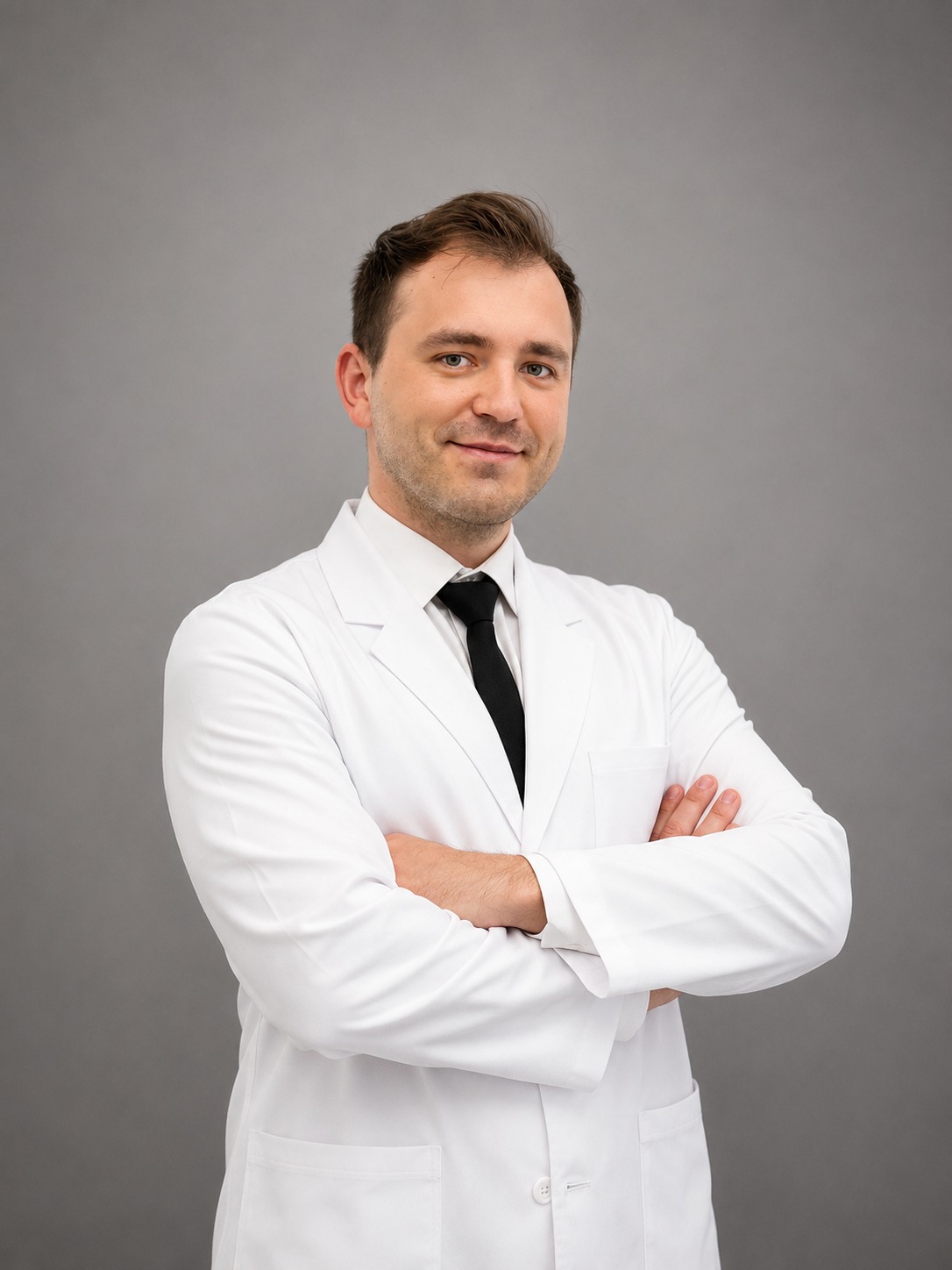
Dr. Costin Duțu, senior consultant in general surgery, is a renowned surgeon who provides pre- and post-operative consultations and check-ups.
Find out moreNewsletter subscription
Sign up for the Artro Sport newsletter free of charge!