The legendary hero Achilles, invincible in battle, had a single vulnerable spot: the area of his heel. Unfortunately, many people experience first-hand the misery of a rupture of the Achilles tendon. However, with a correct diagnosis and appropriate treatment established by an orthopaedic surgeon, the consequences are far less dramatic than they were for the mythological hero.
What is the Achilles tendon?
The largest tendon in the body, the Achilles tendon is a strong, fibrous structure located at the lower back of the calf, whose role is to connect the calf muscles to the heel bone (calcaneus). When these muscles contract, they pull on the Achilles tendon and effectively allow the heel to lift off the ground. This tendon is therefore very important for walking, running, standing on tiptoe, climbing and so on. Its specific structure helps to absorb shocks and gives the foot elasticity.
What is an Achilles tendon rupture?
An Achilles tendon rupture is an injury that can occur during intensive aerobic sports. But this is only one of the causes. Sex, age and associated conditions can create a predisposition to Achilles tendon rupture.
Injuries to the Achilles tendon are fairly common. We may feel a bearable pain or stiffness, and in these cases the degree of damage is mild or moderate. However, when an Achilles tendon rupture occurs, it is usually traumatic and accompanied by severe pain.
Think of a tennis player of around 30 who overloads the tendon through a violent contraction and suffers a partial or complete injury. In some cases, there may be medical indications that the tendon is weakened, through a diagnosis of tendinitis (inflammation of the tendon).
Causes of Achilles tendon rupture
The Achilles tendon is a strong structure, so an extremely large traumatic force is needed to damage it. There are several factors that can lead to an Achilles tendon rupture:
- pushing off hard with the foot, during a jump or at the start of a sprint, with the knee straight
- a fall from a great height
- intensive participation in certain sports or recreational activities (tennis, football, dancing, basketball, hockey – those that involve sudden starts and stops, running and jumping)
In these cases, the Achilles tendon rupture follows a traumatic incident, but there are also a number of factors that can weaken the tendon to the point where it is just one step away from rupturing. These factors include:
- Certain chronic diseases – leukaemia, diabetes, systemic lupus erythematosus, gout, metabolic disorders and infections – disrupt the blood supply, and over time the Achilles tendon becomes more vulnerable to rupture
- Inflammation of the Achilles tendon, or tendinitis, is common in people who run a lot or play sports that involve jumping. This condition weakens the Achilles tendon
- Steroid use is associated with weakening of the Achilles tendon
- Overuse of antibiotics from the fluoroquinolone class causes weakening of the Achilles tendon
Symptoms of a rupture
Anyone who suffers an Achilles tendon rupture will immediately realise that something is wrong with one of their legs. If we notice any of the problems described below, we should see an orthopaedic surgeon urgently.
A partial Achilles tendon rupture is relatively asymptomatic, in the sense that the person concerned may feel pain in the heel area but will still be able to walk.
A complete Achilles tendon rupture, which is more common than a partial one, has clear symptoms:
- Standing on tiptoe and using the calf muscles when walking are practically impossible
- Severe pain and swelling in the area above the heel
- At the moment of injury, some patients hear a sound like a snap
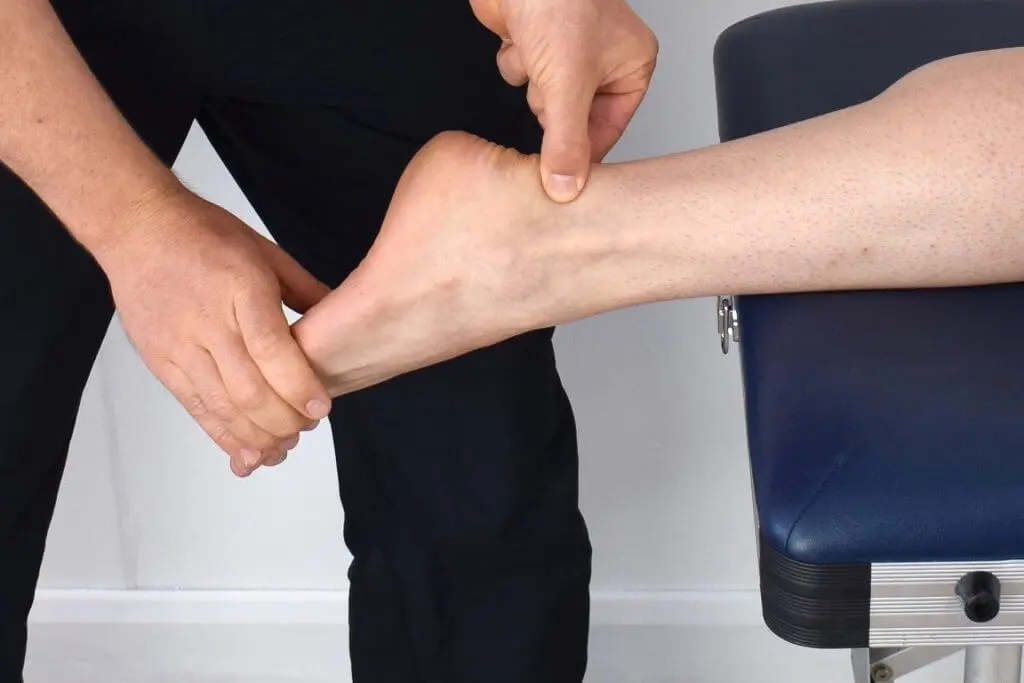
- A gap in the tendon may be felt 2 – 6 centimetres above the heel
Immediately after being diagnosed with an Achilles tendon rupture, it is necessary to see a good orthopaedic surgeon and begin treatment straight away.
Treatment of Achilles tendon rupture
Treatment may be conservative or surgical. Conservative treatment consists of:
- Physical rest and the use of underarm or forearm crutches to avoid weight-bearing on the affected limb
- Ice pack massage, 20 minutes at a time, several times a day. Caution! Ice packs must not be placed directly on the skin
- Using an elastic bandage to prevent further swelling
- Taking anti-inflammatory and pain-relieving medication to reduce pain and inflammation
- Wearing an orthosis or a plaster cast so that the ankle remains immobilised and the tendon can heal more quickly. Immobilisation can last between 3 and 6 weeks
Surgical treatment consists of suturing (stitching) the two ends of the ruptured tendon together. This can be done by open surgery or by minimally invasive techniques (a small incision). The most suitable approach for each case is decided by the surgeon. After surgery, the leg is immobilised in a plaster cast or splint for 6 weeks.
Conservative treatment can give good results, but for a faster recovery and to avoid re-rupture, surgical treatment is recommended. It is the preferred option for athletes, people with intense physical activity and those who have suffered a re-rupture.
Recovery
As soon as the pain and swelling have subsided, physiotherapy must begin so that the strength and range of motion of the affected limb can be regained. This will happen after approximately 4 to 6 months, although certain factors (age, the type and size of the rupture, seeking medical help late and failing to follow the doctor's recommendations) can extend the recovery period.

Dr. Ion Bogdan Codorean
Senior consultant in orthopaedics and sports traumatology. Doctor of Medicine (PhD).
View profileNewsletter subscription
Sign up for the Artro Sport newsletter free of charge!