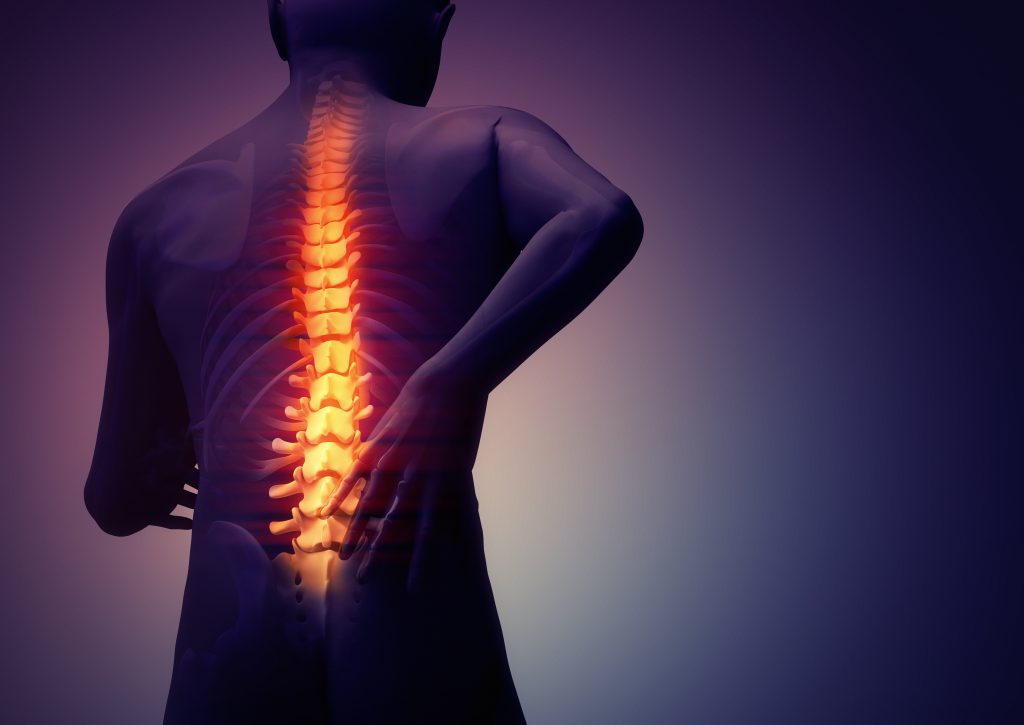
Poor posture develops as a result of deviation of the spine and, apart from the unsightly appearance of the body, it also leads to certain health problems. If you are one of those people who spend a large number of hours at a desk, be aware that the way you sit in your chair directly affects your spine.
Because poor posture is one of the disorders of the spine, it must be treated like any other medical condition, and you need to take certain preventive measures, as well as treatment where necessary. In what follows, we will explain everything you need to know about poor posture and answer all the questions you may have about this condition.
What the consequences of poor posture are
The spine plays a crucial role in the proper functioning of the body. It protects the spinal cord, ensures the balance of the whole body and contributes to the proper functioning of the musculoskeletal system. It is therefore understandable that a faulty posture of the spine can cause a series of health problems, which will manifest throughout the whole body.
Locomotor dysfunction or joint problems
Among the most serious problems caused by poor posture is locomotor dysfunction. People who suffer from this condition experience pain in the lower limbs every time they move around. If left untreated, poor posture will worsen with age, causing permanent health problems.
Herniated disc
Poor posture maintained over a long period of time puts pressure on the spine, which can lead to a herniated disc. This condition can cause constant back pain and, depending on its severity, may only be treatable by surgery.
Vision disorders
If you spend a great deal of time at the computer and do not sit correctly at your desk, you may experience vision disorders caused by the deviation of the spine, which will disappear once you improve your posture.
Carpal tunnel
Although it is common in women aged between 50 and 60, nowadays more and more young people are experiencing carpal tunnel syndrome. The condition presents with pain in the hands and numbness of the forearms and upper limbs, and occurs very often in people who sit badly at their desk or whose job involves repetitive movements.
Nervous symptoms – dizziness, migraines, irritability
A faulty position of the spine can also manifest at the level of the head and can cause nausea, a general state of irritability or dizziness. In addition, the pain caused by inflammation of the muscles of the spine can radiate towards the head, causing constant migraines.
Read also: Foods for healthy bones

What the first signs of this condition are
It is very important to be fully in control of your body's health and to identify any problems that arise early on. If you are experiencing any of the problems below, it is time to try to correct your posture or to seek specialist help.
You are experiencing reduced performance at work
If you have noticed that lately you are no longer as productive at work and that the situation persists, you should make sure that you do not have a problem with your spine.
An increased number of errors
If you find it increasingly difficult to concentrate on activities you previously considered simple, and you notice that you are making a lot of mistakes at work, but also in household chores, the problem may be related to poor posture.
Tasks taking longer to complete
Are your daily tasks taking more and more time and you cannot explain why this situation persists? You may be experiencing a dysfunction of the spine, and it is time to check whether you have any of the symptoms mentioned above.

What the main causes of poor posture are
According to a study carried out by the Mayo Clinic, 80% of people experience back pain at least once in their lives. Although this condition can be caused by genetic or infectious problems, most of the triggers relate to our daily habits, which ultimately lead to poor posture. The condition can thus have six main causes.
Sitting in a chair for hours on end
When you spend a large number of hours in front of a computer, the spine can be seriously affected, resulting in poor posture. Even if your job is the reason you spend so much time sitting, you need to take a 10-minute break at least once every two hours, during which you get up from your chair and move around.
Weakening of the back muscles
People who have a sedentary lifestyle and do not exercise may experience weakening of the muscles of the spine, which contributes to poor posture of the back.
Obesity
People who put on weight will experience problems maintaining correct posture, as well as locomotor conditions. In this case, it is necessary to lose the extra weight, so as not to cause permanent problems of the spine.
High heels
If you like high-heeled shoes, you should avoid frequently wearing heels higher than 5 centimetres, as these can cause deformation of the spine and the development of poor posture.
Pregnancy
During pregnancy, the body tends to change its posture because of the weight of the foetus, and the pelvic area is pulled forwards. In this case, pregnant women need to do certain exercises to work their pelvic muscles and increase their endurance.

The habit of holding a poor posture
If a problem that arose a long time ago led you to adopt a poor posture and you have maintained this body position, it probably feels comfortable to you now and you find it hard to give it up.
Read also: Chondropathy or cartilage damage
What the benefits of a proper back position are
Maintaining correct posture of the back is very important, not only because it prevents pain in the neck, back and shoulders, but also because it ensures a high level of comfort for the whole body.
So, if you have correct body posture and make an effort to avoid curving your spine, you will be able to maintain an active lifestyle and be much more productive in your daily activities.

Investigations needed when poor posture is suspected
If you have experienced any of the symptoms above, or you show signs of poor posture that are negatively affecting your quality of life, it is time to see a doctor for specialist investigations. These will confirm or rule out a problem with the spine and, if there is a deviation of the spine, you will be recommended an optimal treatment to help you regain correct posture. Normally, poor posture can be identified through the Baropodometric test or through various physiological investigations.
The Baropodometric test
This test is based on the analysis of the pressure exerted by the soles of the feet, both standing still and walking, in order to identify faulty posture and its effects on the whole body. Using revolutionary technology, doctors can identify any gait and balance disorder by observing the antero-posterior oscillations of the body.
Other physiological investigations
The first investigation a patient with spinal problems undergoes is the medical history (anamnesis). This is the method by which the doctor learns the patient's medical history and can get closer to the final diagnosis.
If a deformity of the spine is suspected, the doctor may also need certain imaging tests, including: an X-ray of the spine, an MRI scan or a CT scan.

What the most effective ways of preventing poor posture are
To avoid ending up with the problems described above, you need to take a few preventive measures and adjust your lifestyle so as to make sure you will not experience back problems. Although simple to apply, these methods will contribute enormously to the health of your body and will ensure correct posture of your back.
Breaks from sitting
To make sure you maintain the health of your back, you need to take breaks of at least ten minutes for every two hours of sitting. Use the break to walk around and relax the muscles that have become tense from the fixed position you have been in.
Choosing a suitable chair
To find a suitable chair, you need to look for a model that ensures optimal posture at your desk and that is height-adjustable, so that your position is as natural and comfortable as possible. It is also important to make sure you test all the chair models you are interested in, in order to discover the perfect one.
Avoiding working from the sofa or bed for long periods
If at certain times you prefer to take your laptop and work from the sofa or from bed, this has no harmful effects on your health; but if you make a habit of it and spend several hours in this position, spinal problems can develop. To avoid this, try not to work from the sofa or bed for more than an hour and, when you do, it is advisable not to keep your head tilted to the left or right.
Exercising regularly – yoga, swimming, Pilates
Sports such as yoga, swimming or Pilates are an excellent way to maintain a correct back position and to completely reshape your figure. To obtain the desired effects, you need to practise any of these activities for at least 10 minutes a day, 2-3 times a week.
Take care of your body's health and make sure you take all the necessary measures to maintain correct posture of your back and to avoid spinal problems. Remember to sit correctly at the computer and do not forget to take short breaks from desk work, because that is the only way to keep back pain at bay.
Photo source: Shutterstock

Dr. Ion Bogdan Codorean
Consultant in orthopaedics and sports traumatology. PhD in medicine.
View profileNewsletter subscription
Sign up for the Artro Sport newsletter free of charge!