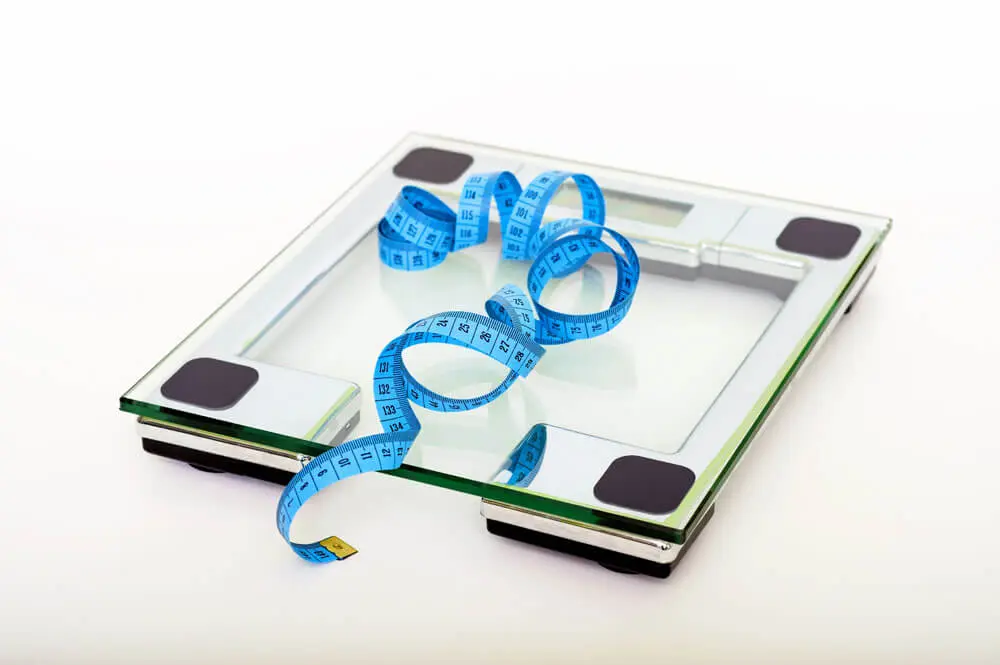
Ideal body weight is an issue that concerns more and more people, for a variety of reasons. If we think of the aesthetic ones, today's beauty standards favour slender figures, sometimes far slimmer than nutritionists would recommend. But this kind of benchmark is extremely subjective, because weight is influenced by a great many factors: sex, sporting activity, lifestyle, food preferences, sleep, and so on. Let us remember that in the past a woman's beauty was associated with generous curves, and in our rural areas the expression "plump and beautiful" still exists.
Ideal weight should be related only to health, and for this reason the nutritionist is the person best placed to determine it. There are many types of ideal weight calculators available online today. However, we should be aware that there is a variety of calculation formulas, each with its own advantages and disadvantages. When calculating the ideal weight, the nutritionist will always take into account the particular characteristics of the patient, will calculate the weight according to age and height, and will calculate the patient's normal weight based on essential information such as the weight-to-height ratio, age, sex and medical history.
Calculating the ideal weight
The nutrition specialist will calculate the ideal weight based on simpler or more complex calculation formulas, taking into account criteria such as age, height, sex, body mass index, waist-to-hip ratio, estimated basal metabolic rate and so on.
What is the Body Mass Index (BMI) and how is it calculated?
The body mass index (BMI) for estimating the ideal weight according to height is a benchmark recommended by the World Health Organization, above all because it does not give a fixed value but rather a psychologically quite comfortable range of what is considered a normal weight. Here, in the table below, is an example of normal weight:
| HEIGHT | WEIGHT MEN | WEIGHT WOMEN |
|---|---|---|
| 145 cm | 35.8 – 43.9 kg | 34.9 – 42.6 kg |
| 147 cm | 38.5 – 46.7 kg | 36.4 – 44.9 kg |
| 150 cm | 40.8 – 49.9 kg | 39 – 47.6 kg |
| 152 cm | 43.1 – 53 kg | 40.8 – 49.9 kg |
| 155 cm | 45.8 – 55.8 kg | 43.1 – 52.6 kg |
| 157 cm | 48.1 – 58.9 kg | 44.9 – 54.9 kg |
| 157 cm | 48.1 – 58.9 kg | 44.9 – 54.9 kg |
| 163 cm | 53 – 64.8 kg | 49 – 59.9 kg |
| 165 cm | 55.3 – 68 kg | 51.2 – 62.6 kg |
| 168 cm | 58 – 70.7 kg | 53 – 64.8 kg |
| 170 cm | 60.3 – 73.9 kg | 55.3 – 67.6 kg |
| 173 cm | 63 – 76.6 kg | 57.1 – 69.8 kg |
| 175 cm | 65.3 – 79.8 kg | 59.4 – 72.6 kg |
| 175 cm | 65.3 – 79.8 kg | 59.4 – 72.6 kg |
| 178 cm | 67.6 – 83 kg | 61.2 – 74.8 kg |
| 180 cm | 70.3 – 85.7 kg | 63.5 – 77.5 kg |
| 183 cm | 72.6 – 88.9 kg | 65.3 – 79.8 kg |
| 185 cm | 75.3 – 91.6 kg | 67.6 – 82.5 kg |
| 188 cm | 77.5 – 94.8 kg | 69.4 – 84.8 kg |
| 191 cm | 79.8 – 98 kg | 71.6 – 87.5 kg |
| 193 cm | 82.5 – 100.6 kg | 73.5 – 89.8 kg |
| 195 cm | 84.8 – 103.8 kg | 75.7 – 92.5 kg |
| 198 cm | 87.5 – 106.5 kg | 77.5 – 94.8 kg |
| 200 cm | 89.8 – 109.7 kg | 79.8 – 97.5 kg |
Another method of assessing weight status is expressed by the body mass index:
BMI = body weight in kg/height in metres squared.
The World Health Organization interprets BMI values as follows:
- 18.49 or less – Underweight
- 18.5 – 24.9 – Normal weight
- 25.0 – 29.9 – Overweight
- 30.0 – 34.9 – Obesity class I
- 35.0 – 39.9 – Obesity class II
- 40.0 or more – Obesity class III
This calculation formula has been criticised for not taking into account the percentage of body fat in relation to muscle mass. This led to another formula, the body adiposity index, BAI. It is calculated as the ratio between hip circumference and height. One drawback is that this formula was studied on Hispanic and African-American populations.
Another calculation method uses waist-to-hip measurements in order to observe the distribution of fat tissue. From a medical point of view, this calculation method is more relevant than BMI, because abdominal fat is associated with an increased risk of type 2 diabetes and cardiovascular disease.
Optimal weight by age
Other methods of calculating the ideal weight include the Lorentz formula, which takes into account the relationship between weight, sex and height and is calculated as follows:
- Men: Ideal weight (kg) = Height (cm) –100 -[(Height (cm)– 150)/4 +(Age (years)- 20)/4]
- Women: Ideal weight (kg) = Height (cm) –100 -[(Height (cm)– 150)/2.5 +(Age (years)-20)/6]
Another frequently used formula is that of the Metropolitan Life Insurance Company of New York, which was used to establish the disease risks of policyholders. It is calculated as follows: Ideal weight = 50 + 0.75 x [H (cm) – 150)] + (A – 20)/4, for men, while for women the value obtained is multiplied by 0.9.
As we can see, the ideal weight value is purely indicative. Only a nutritionist will be able to determine the personalised ideal weight for an adult or a child, centred on the patient's state of health and taking their lifestyle into account. And the diet provided by the doctor after studying all this information is the only one that can meet the body's nutritional needs, so that we not only look good but are also healthy.

Newsletter subscription
Sign up for the Artro Sport newsletter free of charge!